Leadership is the core of every success. Explore how developing strong leadership empowers people drives transformation, and shapes a resilient
Organizational capabilities rely on the ability of people and leadership. Human development is the creation of sustainability for business while creating quality for society. Our people and leadership development programs are always understood the context of the organization and also extend the benefits to society.
No matter how well organization designed, only as good as most people live and work with their best in it.
Our consulting services focus on most critical issues and opportunities: strategy, operations process, technology transformation, advanced analytics, corporate culture, mergers & acquisitions and sustainability. We bring our holistic perspective along with deep expertise will always give you a return on investment that is worthwhile for your business.
We focus on the strategic opportunities of our clients: We are specializing in strategy, organization development, technology & digital transformation, mergers and acquisitions. By focuses on creating sustainability so holistic intervention is therefore our highest priority.
Future Leadership Development
Our Future Skills Center (FSC) focuses on real-work study of each client’s practice to condense the theory-to-practice learning process into one step. Our teaching curriculum therefore focuses on the results that can be achieved on 5 levels. Let's see how it is.
Innovation Design Consulting
What makes your organization innovative? The answer is that we must be an innovative organization to serve you. The questions and answers that led us to create our affiliated innovative design company, Visual Thinking Company. To be an innovation center for society and our customers.
We enjoy working in depth for your lasting results as if we were true partners.
We provide the sustainable and inclusive growth to People and Organization
Combining SE Asia industry expertise along with advanced analytics and human-centered approach enable your business define strategies and drive sustainable growth.
Digital transformation should contribute to three areas: Business, Technology, and the People. Another key factor is change management that create a competitive advantage at the same time.
Building HPO with five dimensions and getting started is easy. Start from the advantages of your organization. HPO is not the job of HR only, but all leaders and all departments must be involved.
The key mechanism underlying the success of all leading organizations is a performance appraisal system that aligns with business strategies. This is the heart of agility in organizations.
Business need to rely on the right human resources to make these sustainability lasting. The right people and leaders in the digital era will contribute exponential outcomes.
Competency models are used for a variety of HR practices, including Recruitment, Talent/Performance Management,, Performance Appraisal and Development
People and Leadership Development
BVC Asia Academy
Leadership & Managerial Program
Mastering Manager of Manager Emerging Manager Program I-II Transitional 5G Manager I-II The Mentor Next Gen Supervisor Coaching 2 Win together Visual Coach Visual Team Coaching Draw2Change: Change Leadership
Learn More
Sales and Communication
Persuasive Sales Talk Consultative Selling The Visual Coach ZNAPT Talk: The Powerful Speech Visual Storytelling
Future Skills
VHINK: Visual Thinking Visual Note 101 Visualize Systemic Thinking Critical Thinking Design Thinking Play Visual Thinking in the Design Thinking Problem Solving & Decision Making Data Analytic 101 Data Visualization
Facilitator & Practitioner
Facilitation 101 Advance Visual Facilitation Experiential Trainer for Online Learning Consultant Bootcamp Scrum Master Crash Course HR for Non-HR 2022
The process of solving organizational problems and developing people's potential at BVC Asia doesn't stop at only business, but we also use that capability to solve problems for society as well.
Knowledge and Action can change the world. Our Innovation Design Consulting consists of 3 business
We dream that everyone's lives will be better with knowledge, understanding and awareness through a Design Thinking approach that helps us solve problems sustainably. We work with state-owned enterprises and non-profits to design human-centered solutions to problems.
Design Thinking Lab
Solve problems with understanding
Data is gold The future of competitive business is data intelligence. It doesn't matter how "BIG" or "SMALL" data you have, but what is important is that you know the right data analysis through correct interpretations for forecasting future needs. Visual data maps that help you interpret your needs and convey them into game-changing strategies.
Data Analytic & Visualize (DAV)
Visual Thinking Company
Communication is the main activity of the so-called human beings. And human beings have a language of communication that comes with them from birth, which is visual language. We take you to the future by going back and searching for basic instincts that everyone can understand right away.
Visual Thinking Company Limited
The expression of understanding is to see it visually
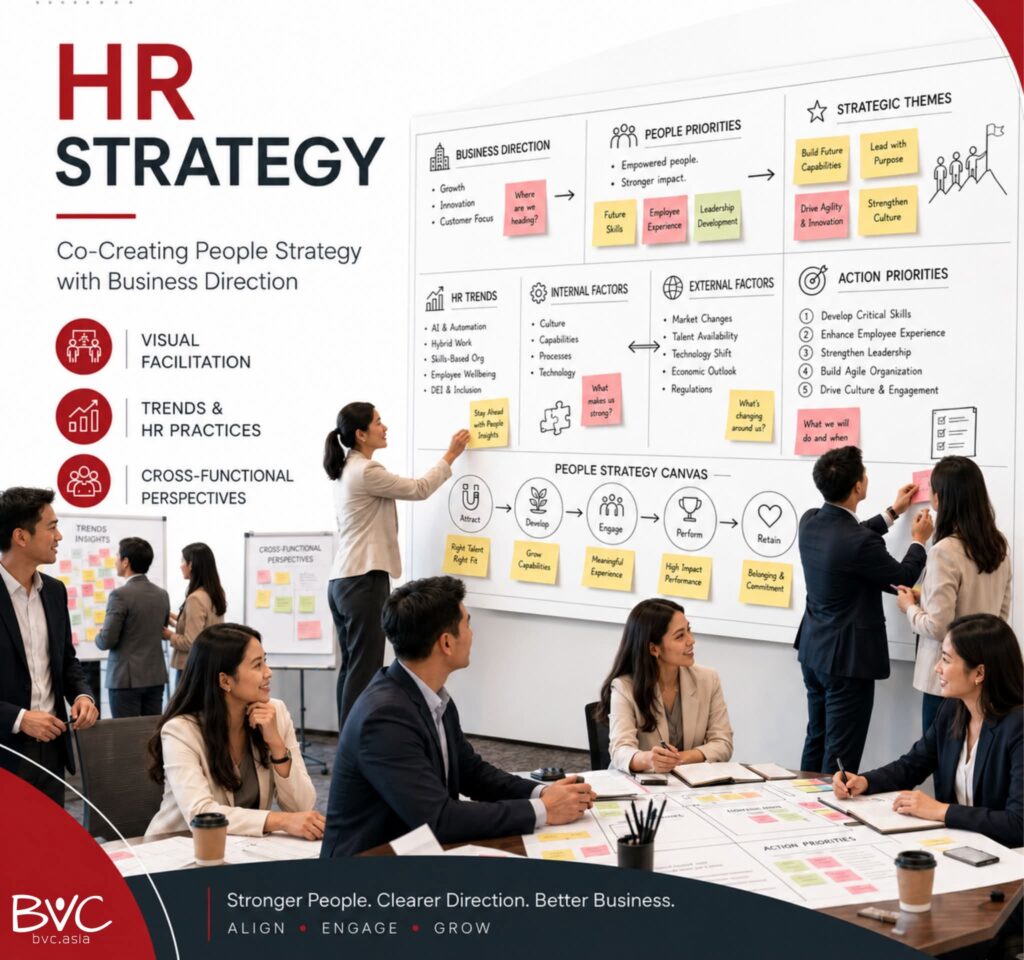
Facilitate กระบวนการคิดกลยุทธ์บุคลากรที่ดึง Business Units มาร่วม Co-Create ให้ตอบโจทย์องค์กรยุคใหม่และสร้างการเปลี่ยนแปลงได้จริง
From Business Direction to People Strategy: Building an HR Strategy That Does Not Start with HR Developing an effective HR Strategy should not begin with the question, “What new HR initiatives should we launch?” Nor should it begin by simply reviewing existing HR programs and deciding which ones need improvement. A stronger starting point is a more fundamental question:
As the business changes, what must the organization become — and how must its people evolve to make that future possible?
This shifts HR Strategy away from being a collection of HR activities and toward becoming a business-driven people strategy. The process begins with the future of the business, translates that future into implications for people and organization, identifies the gaps between today and tomorrow, and only then determines what HR must do. The strategy development process can be understood through eight connected stages.
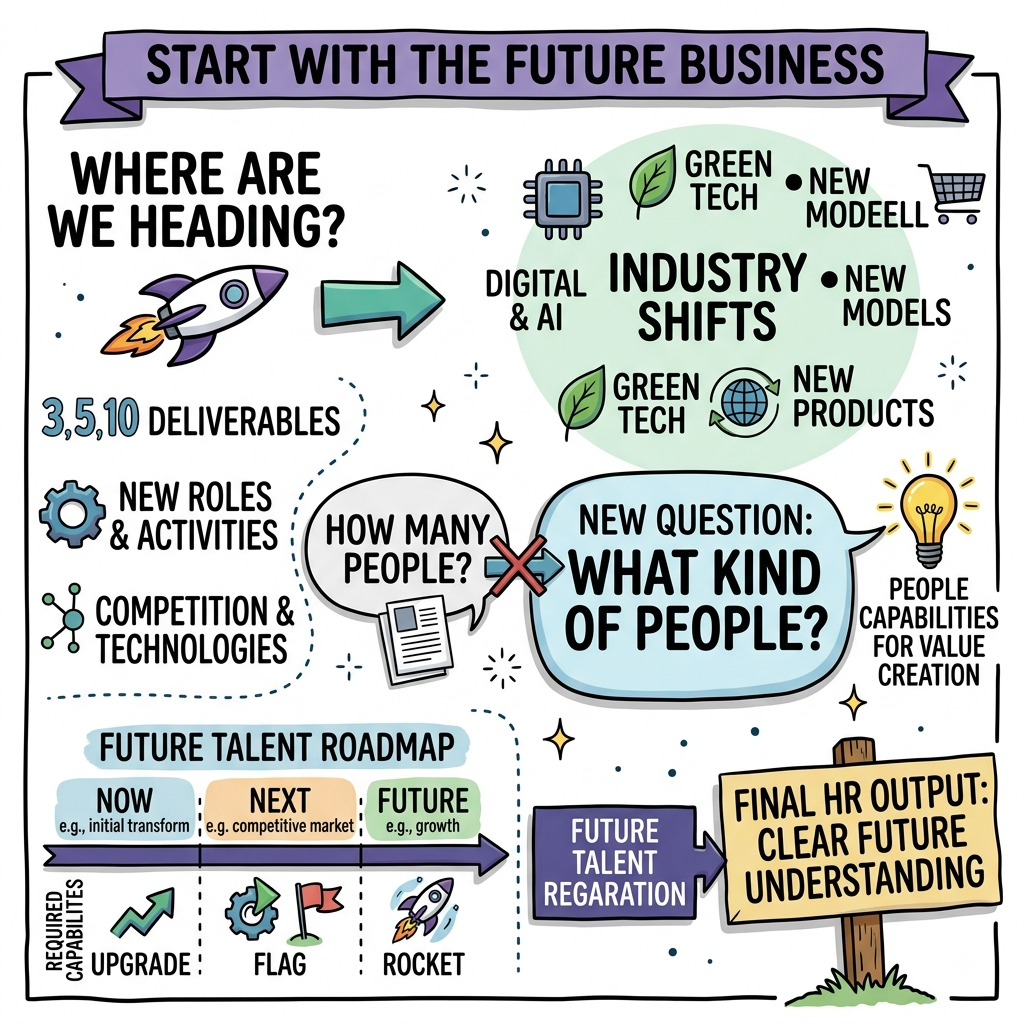
1.Start with the Future of the Business, Not the Current HR Agenda
Before discussing skills, talent, leadership, culture, or HR systems, the organization must first clarify where the business is heading.
What will the organization be expected to deliver in the next three, five, or ten years? What new roles will it play? Which businesses may emerge? Which traditional activities may become less important? Where will competition become more intense? Which technologies will fundamentally change how value is created?
In a rapidly transforming industry, the future may involve new digital platforms, data and AI, green technologies, decentralized operations, new commercial models, direct customer relationships, new products and services, and entirely different competitive dynamics.
2.Scan the Future — Then Translate Trends into People Implications
External scanning often produces a long list of trends: AI, automation, climate change, energy transition, demographic shifts, changing customer expectations, geopolitical uncertainty, new regulations, sustainability requirements, and new business models. But identifying trends is not yet strategic thinking.
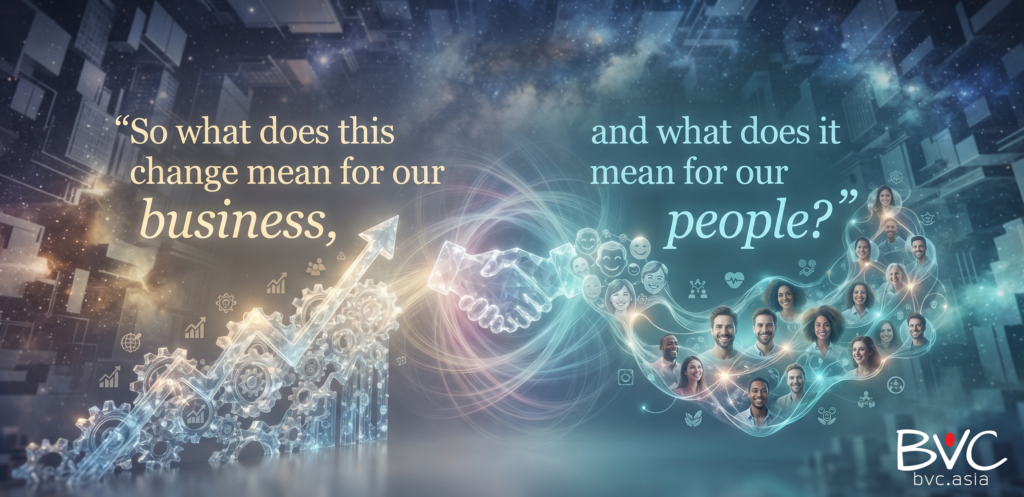
The more useful question is:
“So what does this change mean for our business, and what does it mean for our people?”
A technology trend, for example, should not automatically lead to an “AI training program.”
The organization should first ask: Which jobs will change? Which decisions will become data-driven? Which tasks will disappear or be automated? Which roles will require deeper expertise? How will customer expectations change? What capabilities will managers need to lead people working alongside technology?
Similarly, the transition toward greener business models should not lead only to environmental awareness campaigns.
It should provoke deeper questions: Which new technical capabilities will be required? Which existing skills could become obsolete? Which new commercial opportunities will emerge? Which employees must be reskilled? What behaviors and leadership practices will be required to make sustainability part of everyday decision-making?
A useful logic is therefore:
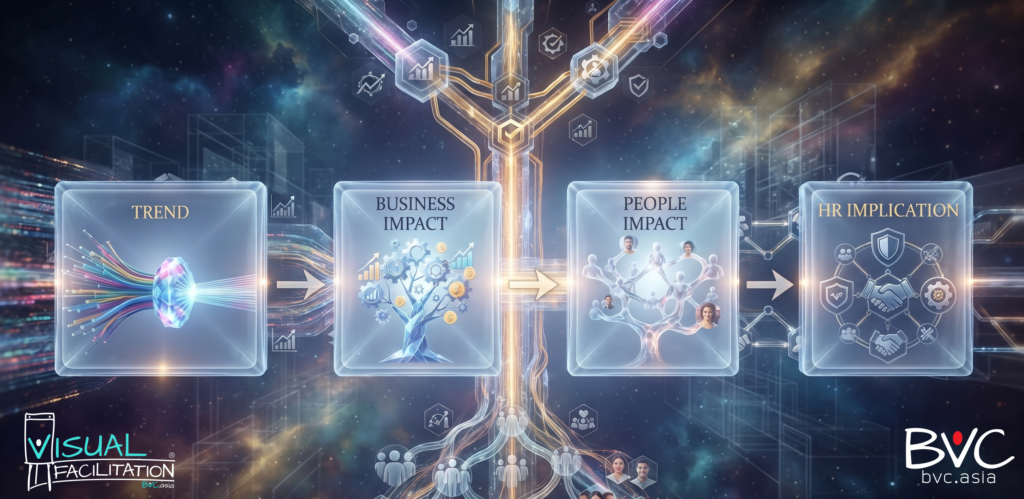
Trend → Business Impact → People Impact → HR Implication : This makes external scanning valuable not because it describes the future, but because it translates that future into workforce requirements.
3.Opportunity or Threat? It Depends on Organizational Readiness
One of the most important lessons in strategic analysis is that an external development is not inherently an opportunity or a threat.
The same change can be both.
A newly opened market may create major commercial opportunities. But if the organization lacks customer insight, commercial capability, pricing expertise, technology, decision speed, or entrepreneurial talent, the same development may become a serious competitive threat.
New technology may increase productivity. But if employees cannot adopt it, managers resist changing how work is done, or existing processes remain too rigid, that technology may increase the gap between the organization and its competitors.
This leads to a much more useful strategic question
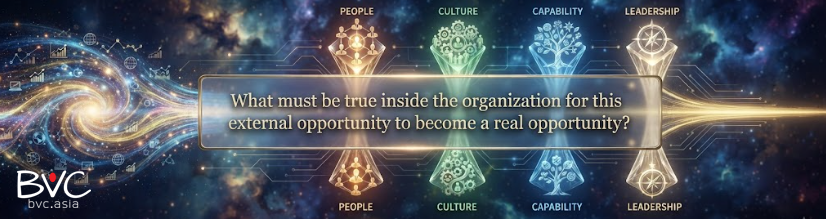
“What must be true inside the organization for this external opportunity to become a real opportunity?”
The purpose of SWOT analysis, therefore, should not be to fill four boxes.
It should reveal the organizational capabilities that determine whether the business can capture an opportunity or withstand a threat.
This is where business strategy begins to connect directly with people strategy.
4.Diagnose the Organization Against the Future — Not Against the Past
Once the future context is understood, the organization can turn inward.
Traditional internal analysis often asks whether systems already exist: Do we have a talent program? Do we have a competency framework? Do we have succession planning? Do we have leadership development? Do we have a performance management system?
A future-oriented diagnosis asks something more demanding:
“Are the systems we have today capable of producing the people and organization we will need tomorrow?”
An organization may already have a talent pool. But are those talents being prepared for future-critical roles? Are they being deployed to strategic assignments? Are they being used to solve real business challenges?
A performance management system may exist. But does it differentiate performance meaningfully? Does it create useful performance conversations? Does it inform development, career, talent, succession, and workforce decisions?
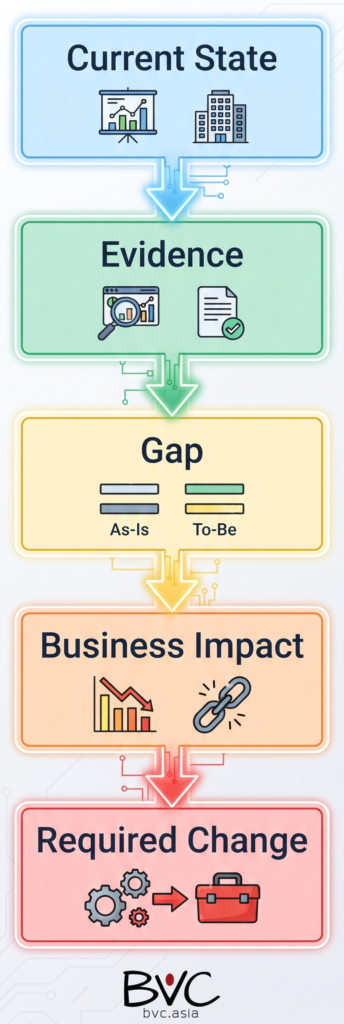
Learning programs may be extensive. But do they close critical skill gaps? Can employees apply what they have learned? Does the organization know whether capability has actually improved? The logic of internal diagnosis therefore becomes:
Frameworks such as McKinsey 7S can support this analysis across Strategy, Structure, Systems, Shared Values, Style, Staff, and Skills. But the framework itself is less important than the question behind it:
“How ready are we for the future we say we want?”
5.Turn Analysis into Strategic Issues That Matter to the Business
After external and internal analysis, the organization usually has too much information rather than too little.
The next challenge is synthesis.
Terms such as Talent, Leadership, Digital HR, Culture, Workforce Planning, or Employee Experience are not yet strategic issues. They are topics.
A true strategic issue should explain why the topic matters and what will happen if the organization does not address it.
For example, rather than saying:
“We need to improve talent management,”
the deeper strategic issue may be:
The organization is entering new businesses, but future-critical roles do not yet have sufficient internal talent pipelines, creating dependency on external hiring and increasing execution risk.
This framing changes the quality of the strategy immediately.
Strategic issues should therefore be tested against questions such as: Why does this matter to the future business? What business capability will be constrained if this remains unresolved? Is the root cause primarily workforce, capability, structure, leadership, culture, or system-related? How urgent is the issue? And is HR truly the owner, or is HR an enabler of a broader business issue?
The result should be a small number of meaningful strategic themes rather than a long catalogue of HR topics.
Typical themes may include workforce and organization, future capabilities, talent, leadership and change, culture, performance, digital/data/AI, employee experience, and future talent attraction.
6. Define the Future People Before Designing the HR Programs
A critical bridge is often missing between SWOT analysis and HR initiatives.
That bridge is the Future People Proposition.
Before deciding which HR projects to implement, the organization should ask:
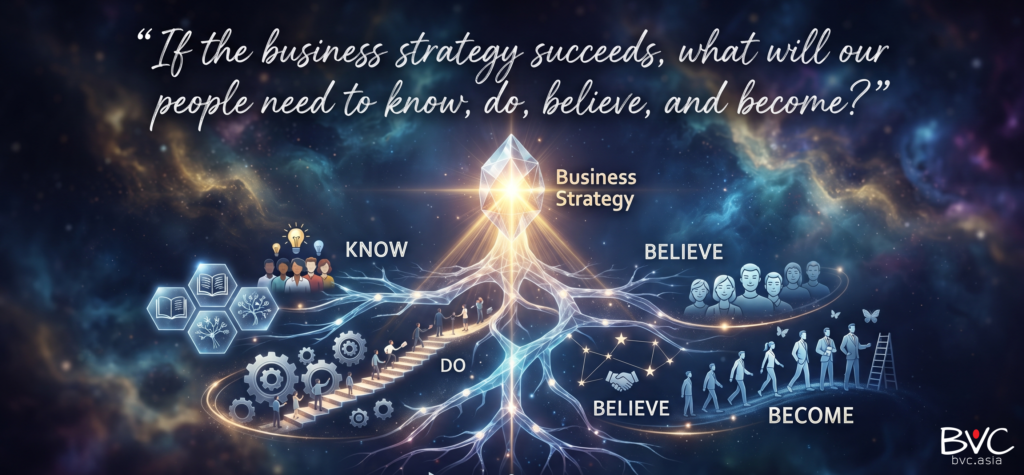
“If the business strategy succeeds, what will our people need to know, do, believe, and become?” This question produces a much clearer picture of the workforce the strategy is intended to create.
This question produces a much clearer picture of the workforce the strategy is intended to create.
Example: A business entering more competitive markets may require employees with stronger Business and Entrepreneurial Mindsets — people who identify opportunities, understand customers, experiment, make decisions under uncertainty, and turn ideas into value.
A business undergoing green transformation will require more than environmental awareness. It will require Green Skills, Green Behaviors, and a Green-oriented organizational culture.
A business driven increasingly by technology will require more than basic digital literacy. Employees must be able to apply Digital, Data, and AI capabilities to improve work, decision-making, operations, and customer experience.
An organization that expects innovation and faster execution must also reconsider the employee experience. People cannot be expected to behave entrepreneurially while every decision requires multiple layers of approval.
Employees need space to think, authority to act, permission to experiment, access to information, and recognition when they create value.
The future workforce may therefore be defined through characteristics such as Digital/Data/AI Capability, Green Workforce Readiness, Customer Centricity, Entrepreneurial Mindset, Future-Critical Talent, Empowerment, Learning Agility, and Cross-functional Collaboration.
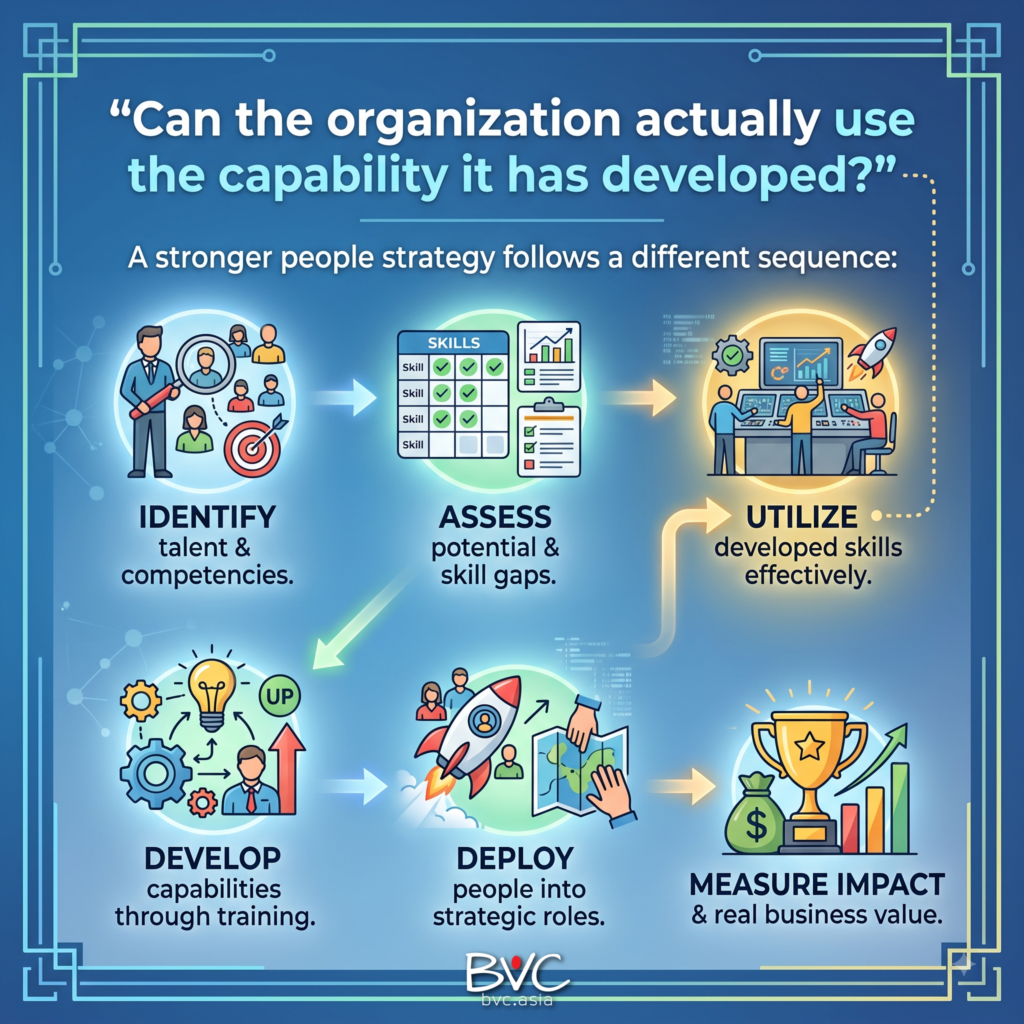
7.Move Beyond Development — Build the Ability to Deploy and Use People
One of the biggest weaknesses in conventional HR strategy is the assumption that development itself is the outcome.
Employees are assessed. Gaps are identified. Training is delivered. The program is completed.
But the business question remains unanswered:
Talent management illustrates this clearly.
The size of the talent pool tells us very little about organizational capability. A much more meaningful question is whether ready talent has been deployed into critical roles, transformation projects, new businesses, strategic assignments, or leadership pipelines.
A stronger people strategy follows a different sequence
The same applies to future skills.
Completing a learning program is not the goal. Employees must be able to apply new capability in real work.
Entrepreneurial Mindset should not end with an assessment score. Employees should be given opportunities to identify opportunities, test ideas, build business cases, pilot solutions, commercialize new products or improve customer value.
Green capability should not end with Green Skills certification. It should influence projects, operational decisions, customer solutions, resource efficiency, innovation, and the transition toward sustainable business.
The strategic question therefore becomes:
“How effectively can the organization convert human potential into business capability?”
This is the point at which HR Strategy begins to become genuine business strategy.
8. Design KPIs That Show the Journey from HR Activity to Business Impact
Measurement is one of the strongest tests of strategic clarity.
A useful question for every HR KPI is:
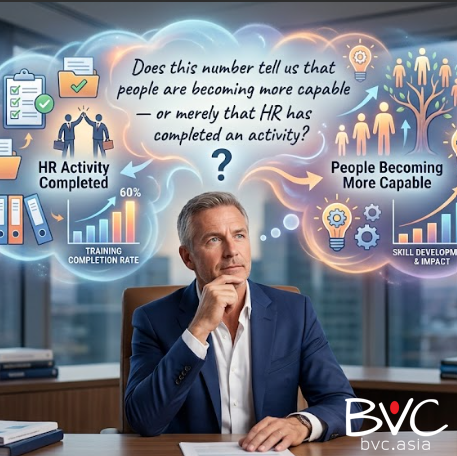
“Does this number tell us that people are becoming more capable — or merely that HR has completed an activity?”
Training completion measures activity.
Passing an assessment begins to measure capability.
Applying the skill in real work measures application.
Consistent use of new behaviors measures adoption.
Improved productivity, customer outcomes, innovation, revenue, risk, or operational performance begins to demonstrate business impact.
A useful measurement hierarchy is therefore:
Case Study: Consider digital capability.
Instead of measuring only the percentage of employees trained in AI, an organization might measure whether people have the required Digital/Data/AI proficiency for their roles, whether they apply those capabilities in work, and whether technology-enabled work actually improves productivity or customer experience.
For talent, measurement can move from Talent Identification to Talent Readiness, Talent Deployment, Talent Utilization, and ultimately Talent-led Business Outcomes.
Case Study: Green transformation
measurement can progress from Green Skills Readiness to Green Skills Application, Green Behavior Adoption, and finally contribution to Green Transformation outcomes.
This also clarifies accountability.
HR should not automatically own every business result.
Revenue, carbon reduction, market share, customer retention, or business profitability are usually shared outcomes involving business functions, strategy, finance, operations, sustainability, and HR.
HR’s accountability lies in demonstrating that the organization has the people readiness, capability, talent, behaviors, leadership, and workforce systems required to achieve those outcomes.
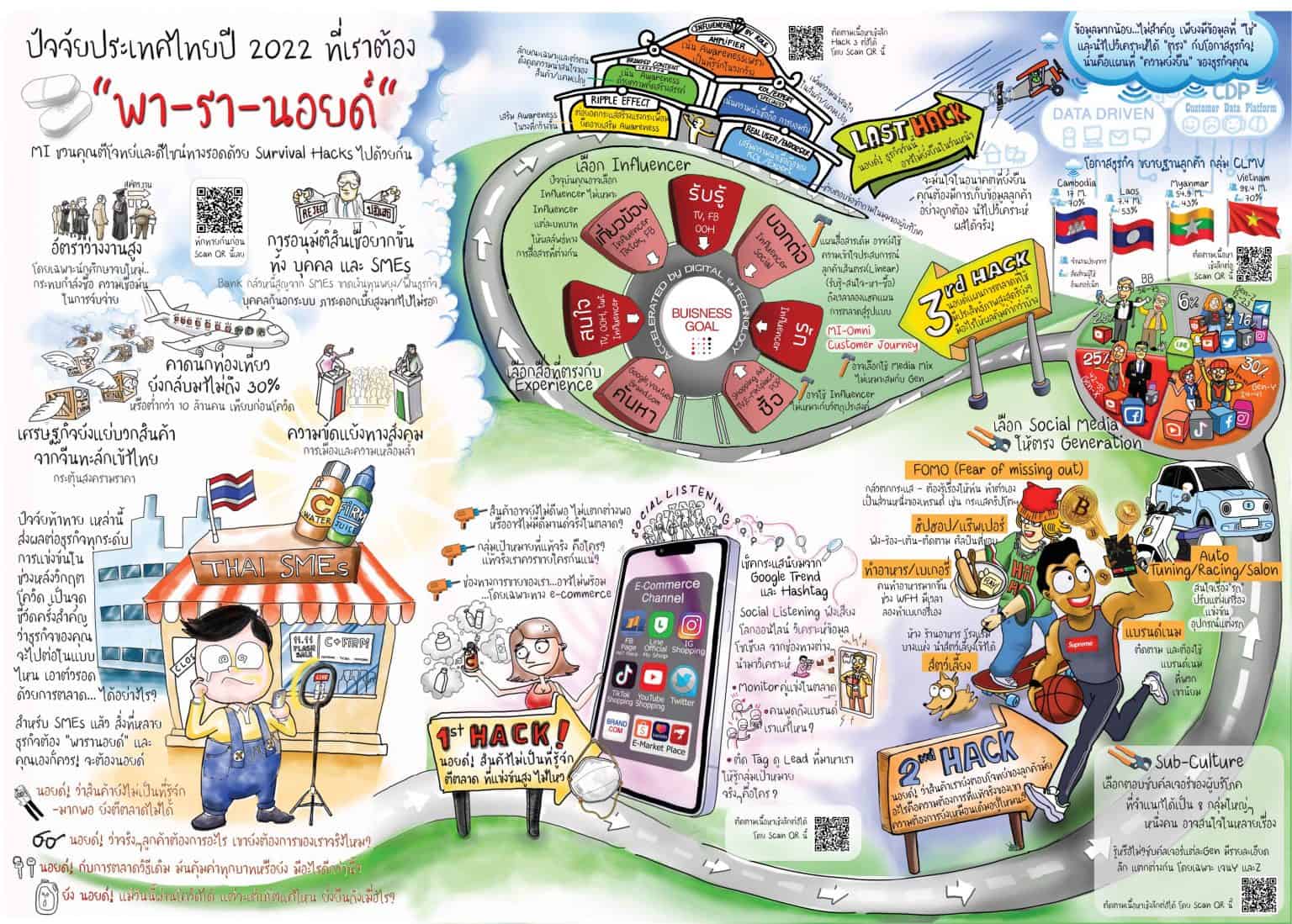
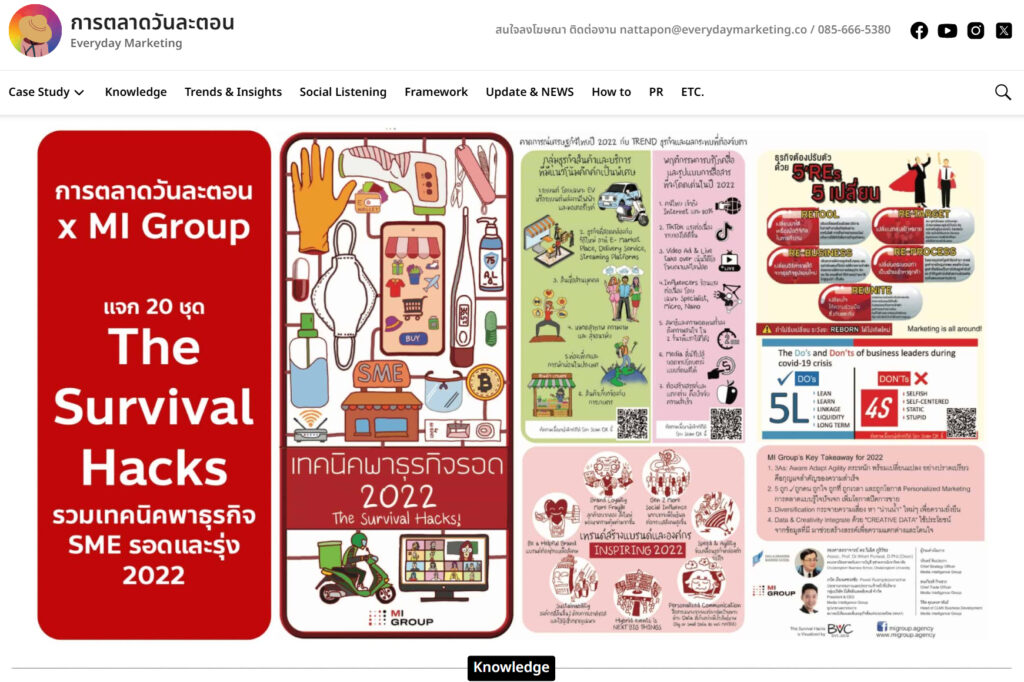
A “Survival Hack” blueprint for SMEs and small businesses to adapt and thrive in a rapidly changing and uncertain environment. In a time of growing uncertainty and economic turbulence, true insight stands the test of time.
When Pawat Ruangdejworachai, CEO of MIGroup, envisioned the need to equip Thai businesses with strategic survival tools, it wasn’t just about navigating the challenges of 2022. It was about creating a mindset—a lasting framework—that could guide businesses through the storms ahead.
Combining real-world marketing wisdom with the academic depth of Assoc. Prof. Dr. Wilert Puriwat from Chulalongkorn Business School (CBS), the Survival Hack 2022 framework was born. It reflected deep market understanding, consumer psychology, and agile business adaptation, distilled into actionable strategies for entrepreneurs and SMEs.
To translate this powerful knowledge into a compelling form, BVC Asia took the lead. Under the creative direction of Panit Thanmongkolsawad—fondly known as “Poon” — the Survival Hack was transformed into a visual storytelling experience. Each element was carefully illustrated to not only convey information but to engage, spark action, and inspire change.
Though created in 2022, this visual framework has only grown more relevant in 2025. Inflation, interest rate hikes, shifting consumer behaviors, and digital disruptions continue to challenge Thai entrepreneurs daily. And the principles of Survival Hack—visibility, sub-culture marketing, omni-channel journey design, and data-driven personalization—are more essential than ever.
BVC Asia proudly presents this timeless piece of strategic thinking in a form that speaks to both heart and head. Whether you’re a business owner fighting to stay afloat or a corporate leader looking to future-proof your growth, this is more than an Visual Storytelling. It’s a compass.
Let Survival Hack 2022 be your guide in 2025 and beyond.
เล่าเรื่องเป็นภาพ Visual Story ภาพสรุปเรื่องราวที่ MIGroup ไว้วางใจ ให้ BVC Asia สรุปแนวคิดเอาตัวรอดของธุรกิจ ในช่วง Covid และ Post-Covid
External Pressure Factors
– Recession, inflation, high fuel prices, rising interest rates
– Weakening Thai Baht affects tourism and import costs
– Consumer anxiety and uncertainty at a record high
Marketing Intelligence Advice: Be paranoid smartly Listen to the market constantly Adapt and test rapidly
Being good isn’t enough — being visible wins Integrate 4 key forces: Data, Experience, Sub-Culture, Omni-Channel
Survival Hacks (3 Main Hacks)
1st Hack: “Stay visible even when customers don’t look” -Maximize product exposure across all digital platforms -Use Social Listening to detect trends and hashtags -Diversify E-Commerce Channels (Shopee, Lazada, TikTok Shop, Line) -Use data tagging to improve Lead targeting
2nd Hack: “Reach through Sub-Culture Lanes” Tailor content and marketing to subcultures: Pet lovers, Runners, Car tuners, Basketball fans Leverage FOMO (Fear of Missing Out) Showcase passion and lifestyle-based engagement Build micro-communities of loyal spenders
3rd Hack: “Redesign the Omni-Customer Journey” Mix online and offline experiences Align platforms by generation preferences Gen Z → TikTok, Instagram Gen Y → Facebook Gen X/Boomers → LINE, YouTube Customize content to fit behavior of each segment
In a time of growing uncertainty and economic turbulence, true insight stands the test of time.
Though created in 2022, this visual framework has only grown more relevant in 2025. Inflation, rising interest rates, a weakening Thai Baht, and elevated fuel prices have combined to pressure both businesses and consumers. Anxiety among Thai consumers has reached record highs, and business leaders are still navigating the turbulence of digital disruption and behavioral shifts.
A clear blueprint for adaptation and resilience, Survival Hack 2022 lays out four key strategic approaches. The first is visibility—”stay visible even when customers aren’t looking.” Brands must maximize digital exposure across platforms and use social listening to detect rising trends and hashtags. Diversifying e-commerce channels, from Shopee and Lazada to TikTok Shop and LINE, and applying data tagging for sharper lead targeting are now non-negotiable tactics.
The second hack focuses on sub-culture marketing. By tapping into niche communities—pet lovers, runners, car tuners, basketball fans—businesses can build trust and affinity through passion-based engagement. Leveraging FOMO (Fear of Missing Out) and forming micro-communities of loyal spenders provide strong foundations for long-term relevance.
The third strategy involves redesigning the omni-customer journey. Today, online and offline experiences must be blended seamlessly. Marketing must be platform-specific and generationally aligned—Gen Z gravitates toward TikTok and Instagram, Gen Y prefers Facebook, while Gen X and Boomers spend time on LINE and YouTube. Content customization for each segment is critical.
Finally, data is the GPS. Businesses need to build strategies using a Customer Data Platform (CDP), capturing behavioral signals at every touchpoint to enable personalized customer experiences. Long-term growth now depends on understanding and enhancing Customer Lifetime Value (CLTV).
These principles are not just theories—they’re field-tested tactics that still hold true. As Southeast Asia opens new doors, CLMV markets (Cambodia, Laos, Myanmar, and Vietnam) present powerful expansion opportunities. With growing digital adoption and cross-border trade infrastructure, Thai businesses must seize the momentum.
BVC Asia proudly presents this timeless piece of strategic thinking in a form that speaks to both heart and head. Whether you’re a business owner fighting to stay afloat or a corporate leader looking to future-proof your growth, this is more than an infographic. It’s a compass.
Let Survival Hack 2022 be your guide in 2025—and beyond.
Creative Process Behind the Visual by Panit Thanmongkolsawad
Interview for Insights – The journey began with depth, not design. Panit conducted a series of in-depth interviews with Mr. Phawat, using not only questions but also exploratory sketches as tools to mine the deeper layers of intent behind each idea. This hybrid of dialogue and visual thinking helped unearth key principles, inner motivations, and the unspoken drivers behind the Survival Hack philosophy. The process went far beyond surface-level discussions—it tapped into the essence of strategic vision, capturing the emotional and logical frameworks that shape business survival.
Curate the Intent – Once the foundational insights were drawn, Panit transitioned into the curator’s role. He designed a storyboard that wasn’t just a sequence of content, but a visual map that mirrored a learning journey. This “map” was crafted to pull viewers into a narrative flow—encouraging them not just to read, but to explore, reflect, and connect. The structure mimicked how a childhood storybook pulls you in: each element was placed with the intention of sparking curiosity, evoking wonder, and guiding understanding organically. It was storytelling with strategic intent.
Craft in Canvas – With a refined vision in hand, Panit meticulously translated insight into image. Using illustration as a medium, he wove symbols, metaphors, and conceptual models into a singular visual experience. The canvas became more than a design—it became a container of time, perspective, and knowledge. Every curve, color, and composition decision was deliberate, built to transcend years and still resonate. The result was a work that isn’t just beautiful—it’s timeless, intellectually rich, and emotionally resonant.
แนวทางที่สามคือ การออกแบบ Omni-Channel Journey ที่ผสมผสานประสบการณ์ออนไลน์และออฟไลน์ โดยจัดการคอนเทนต์ให้เหมาะกับแต่ละ Generation – Gen Z ใช้ TikTok และ IG, Gen Y ใช้ Facebook, ส่วน Gen X และ Baby Boomer ใช้ LINE และ YouTube
สุดท้ายคือ Data คือ GPS – ธุรกิจต้องใช้ Customer Data Platform (CDP) เก็บข้อมูลทุก Touchpoint เพื่อสร้างประสบการณ์เฉพาะบุคคล และผลักดันมูลค่า Customer Lifetime Value (CLTV) ให้เติบโตอย่างยั่งยืน
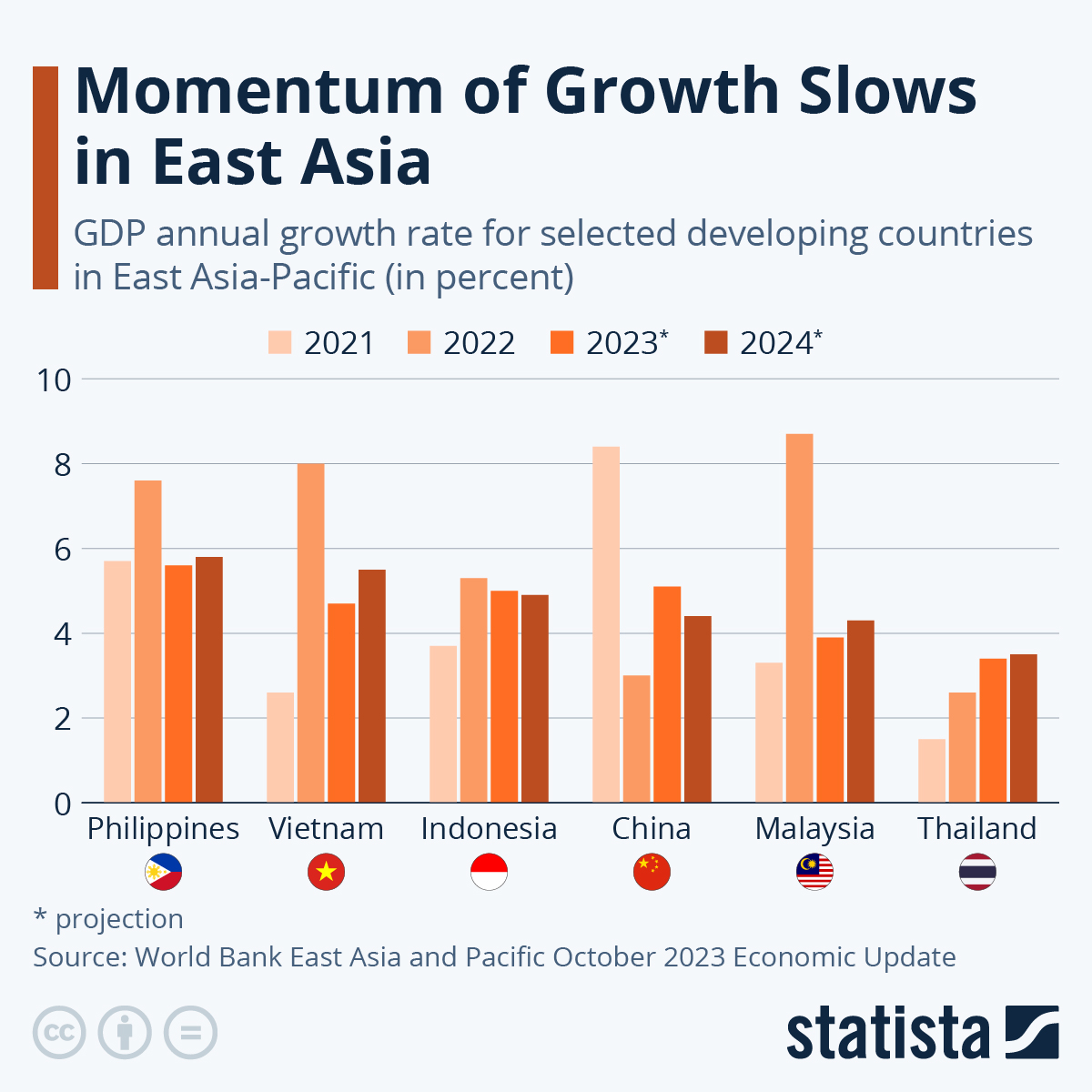
In May 2025, Asia’s economic landscape is characterized by a complex interplay of geopolitical tensions, trade disruptions, and domestic policy shifts. While growth persists, the region faces mounting challenges that temper optimism.
Trade Tensions and Geopolitical Risks
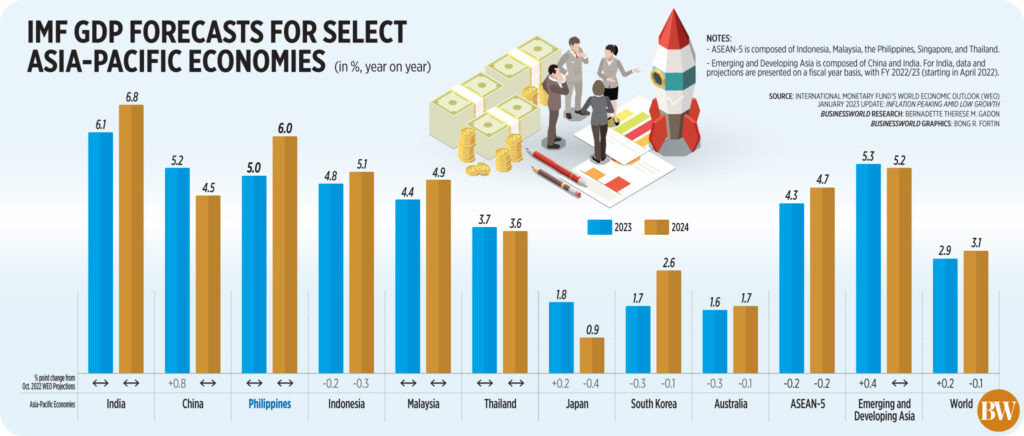
The escalation of U.S. tariffs, ranging from 10% to 49%, has significantly impacted several ASEAN economies, including Malaysia, Vietnam, and Singapore. These measures threaten to derail the bloc’s 2025 growth target of 4.7% . In response, ASEAN nations are advocating for deeper economic integration and have requested a special summit with the U.S. to address these concerns.Reuters+2AP News+2AP News+2
Simultaneously, China’s economic slowdown adds to regional uncertainties. Fitch Ratings has downgraded China’s medium-term growth forecast from 4.6% to 4.3%, citing structural challenges and weakening external demand .The Times of India
Divergent Economic Trajectories
India: Emerging as a regional bright spot, India is projected to drive global growth with a forecasted GDP growth of 6.4% in 2025. Benign domestic inflation strengthens the Reserve Bank of India’s prospects for rate cuts, potentially stimulating further economic activity .ING Think@EconomicTimes+1BNP Paribas Economic Research+1
Indonesia: Facing headwinds from reduced Chinese demand and internal fiscal adjustments, Indonesia’s growth is expected to moderate to 4.8% in 2025 .Reuters
Philippines: Despite global challenges, the Philippines is poised for one of the fastest growth rates in Asia, bolstered by infrastructure development and resilient domestic consumption .
Inflation and Monetary Policy
Regional inflation is projected to moderate to 2.3% in 2025, down from previous years, as global commodity prices decline . This trend provides central banks across Asia with the flexibility to implement accommodative monetary policies. Most are expected to enact two to three rate cuts in 2025, tailored to their specific economic conditions .Asian Development BankGlobal Markets
Strategic Initiatives and Regional Cooperation
In light of external pressures, Asian nations are seeking to bolster regional cooperation and diversify economic partnerships. The ASEAN+3 Macroeconomic Research Office emphasizes the importance of structural reforms and policy coordination to enhance resilience . Additionally, initiatives like the Eastern Economic Corridor in Thailand aim to transform the region into a high-tech industrial hub, attracting significant investment and fostering innovation .Wikipedia+3AP News+3AP News+3AMRO AsiaWikipedia
Outlook
Asia’s economic outlook for 2025 is a tapestry of resilience amid adversity. While external challenges persist, internal dynamism and strategic policy responses offer a pathway to sustained growth. The region’s ability to navigate these complexities will define its economic trajectory in the coming years.
Note: This analysis is based on data and reports available up to May 2025.
อยากรู้เบื้องหลังการทำงานของ “ปุ่น พนิต” และ BVC Asia ที่ทำให้ Visual Strategy นี้มีพลังสื่อสารขนาดนี้? ติดตามเรื่องราว และแรงบันดาลใจจากผลงานระดับประเทศนี้ได้ที่นี่ (The Secret Sauce Facebook) หรือติดตามข่าวด้านล่าง
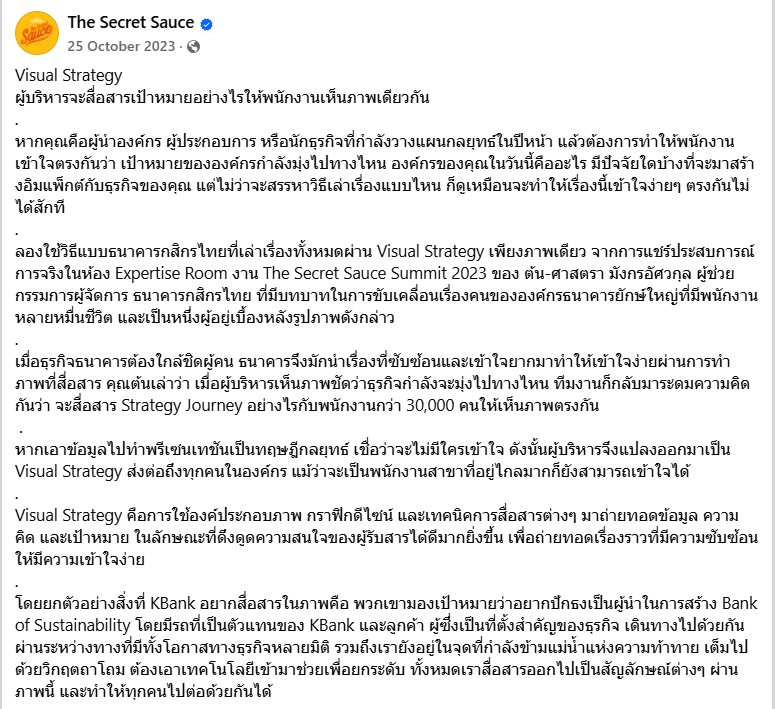
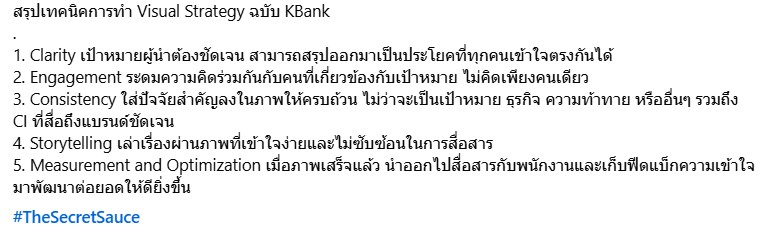
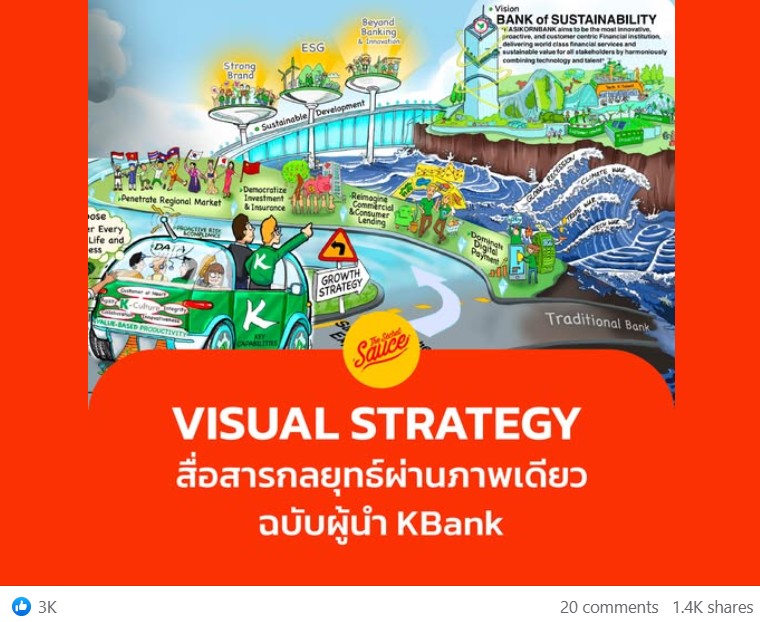
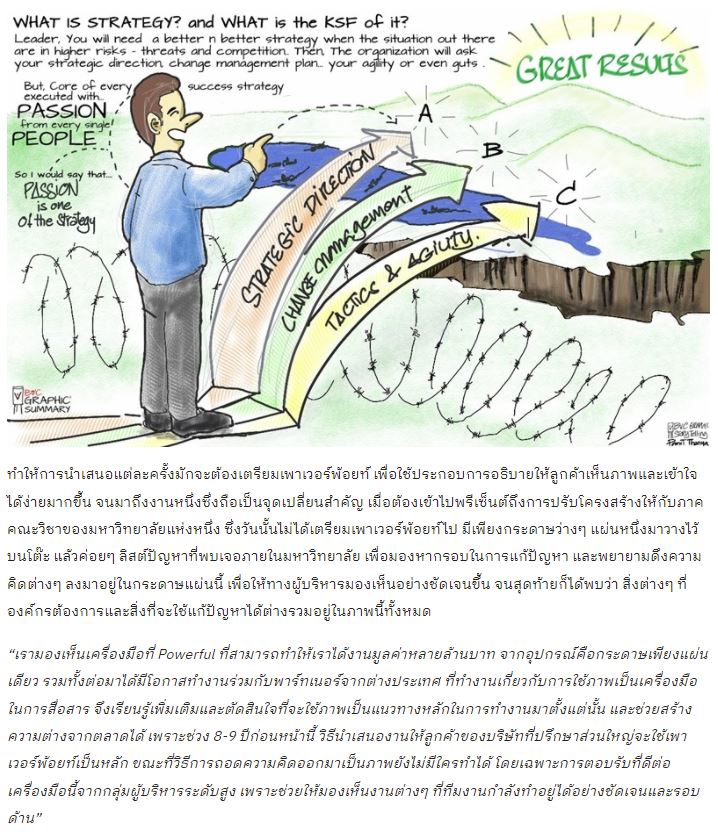
Visual Strategy How can executives communicate goals so that employees all see the same picture? If you are a leader, entrepreneur, or businessperson planning your strategy for next year and want your employees to clearly understand where the organization is heading, what your organization looks like today, and what factors will impact your business, it often seems difficult to make this message clear and consistent. Try the approach used by Kasikornbank, which tells the whole story through just one Visual Strategy image. This was shared during the Expertise Room session at The Secret Sauce Summit 2023 by Ton-Sastra Mangkasuvakul, Executive Vice President of Kasikornbank, who plays a key role in driving people strategies for this large bank with tens of thousands of employees and was one of the masterminds behind the image. Since banking is a business that needs to be close to people, the bank often takes complex and hard-to-understand matters and makes them simple through visual communication. Ton explained that once the executives clearly see where the business is heading, the team brainstorms on how to communicate the Strategy Journey so that over 30,000 employees can have the same understanding. If this information were presented as a theoretical strategy presentation, it’s unlikely anyone would truly understand it. Therefore, executives transformed it into a Visual Strategy and shared it throughout the organization, so even branch employees in remote locations can grasp it. Visual Strategy is the use of visual elements, graphic design, and communication techniques to convey information, ideas, and goals in a way that attracts the audience’s attention and makes complex stories easier to understand. For example, what KBank wants to communicate through their image is their goal to become the leader in creating the “Bank of Sustainability.” The image shows a vehicle representing KBank and its customers—the foundation of the business—traveling together along a path filled with multidimensional business opportunities. The image also depicts crossing a river of challenges and crises that require technology to elevate their capabilities. All of these are communicated symbolically through the image, enabling everyone to move forward together.KBank’s Visual Strategy Techniques Summary 1.Clarity The leader’s goals must be clear and summarized into a sentence that everyone can understand and align with. 2.Engagement Brainstorm collaboratively with all stakeholders involved in the goal; don’t think alone. 3.Consistency Include all key factors in the image—such as goals, business context, challenges, and clearly represent the corporate identity (CI) and brand. 4.Storytelling Tell the story through simple, easy-to-understand visuals without complicated communication. 5.Measurement and Optimization After completing the image, communicate it to employees, gather feedback on their understanding, and continuously improve and refine it.
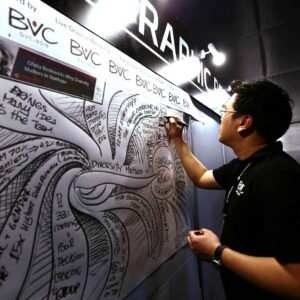
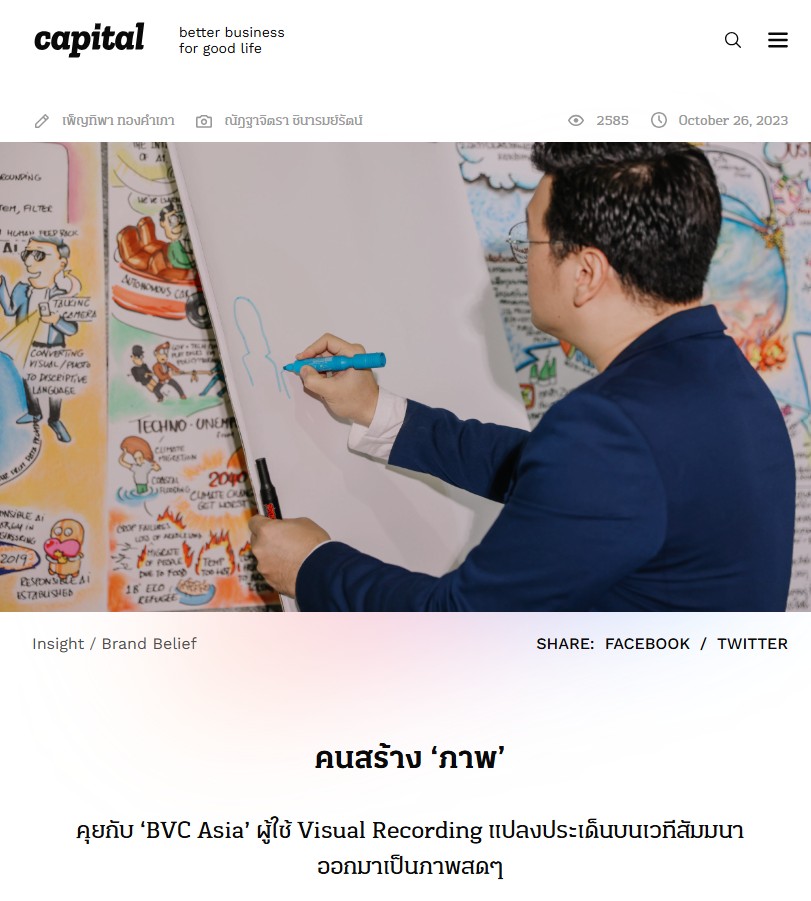
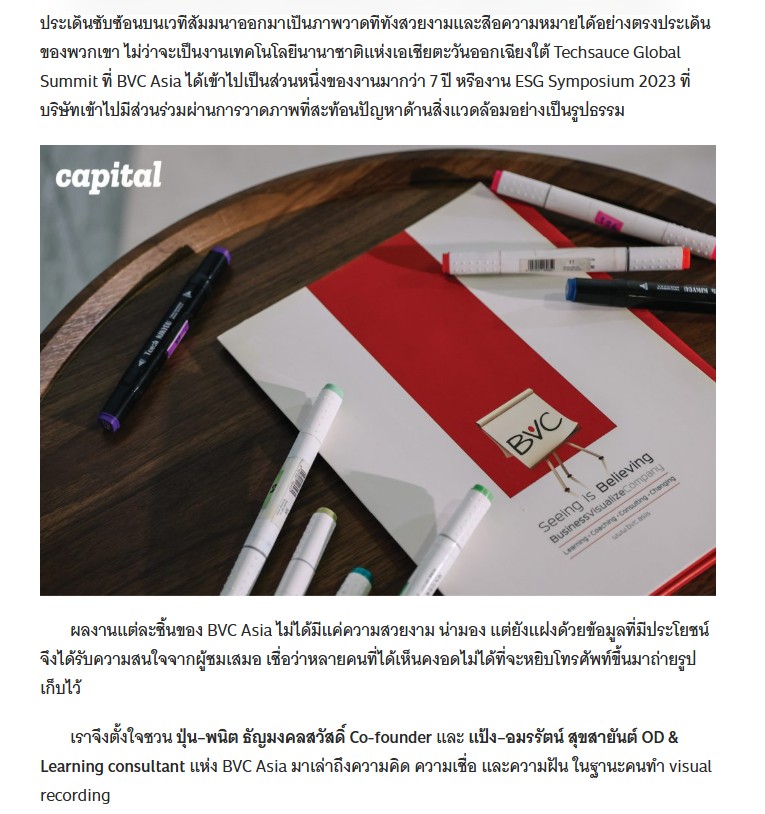
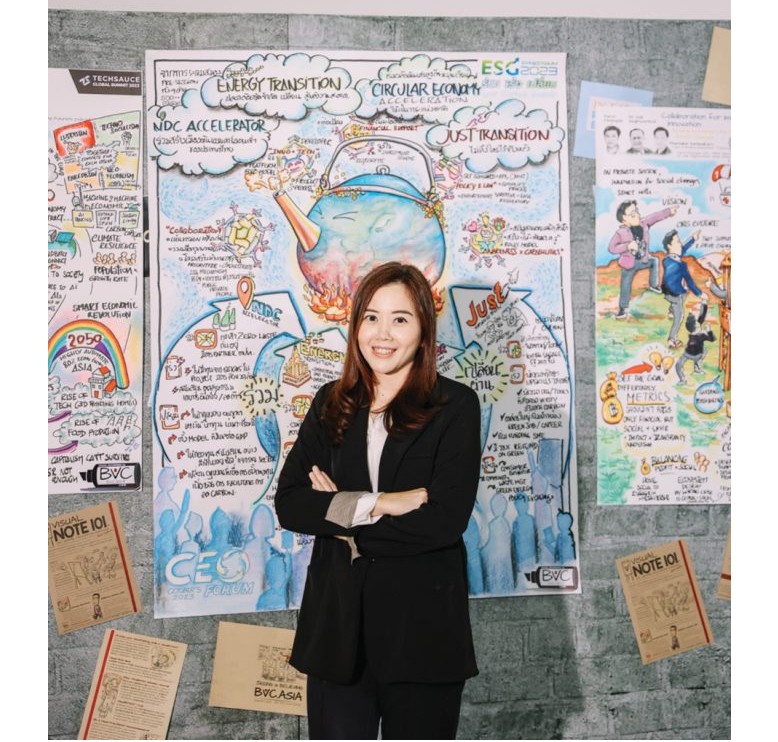
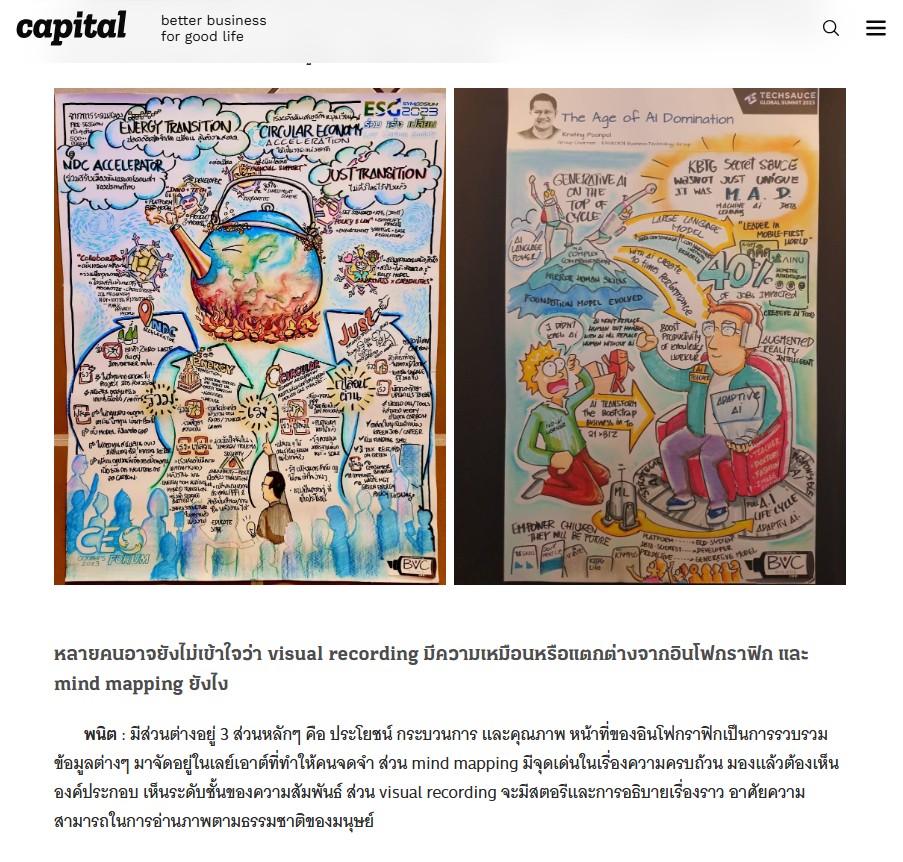
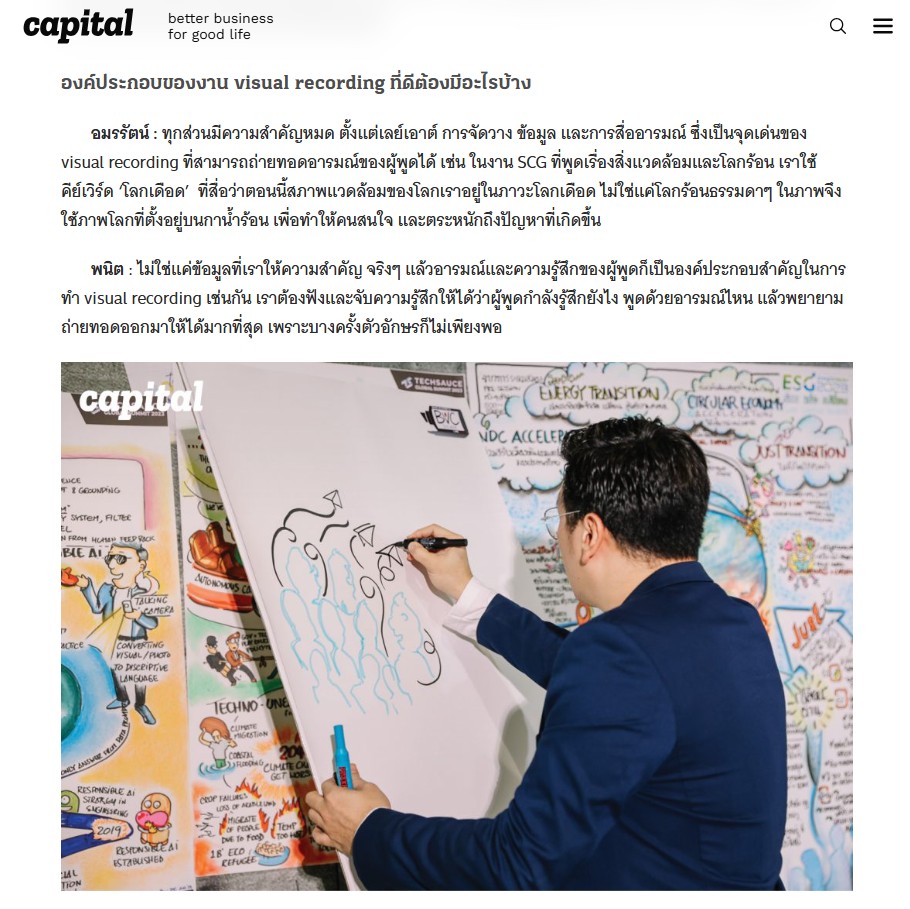
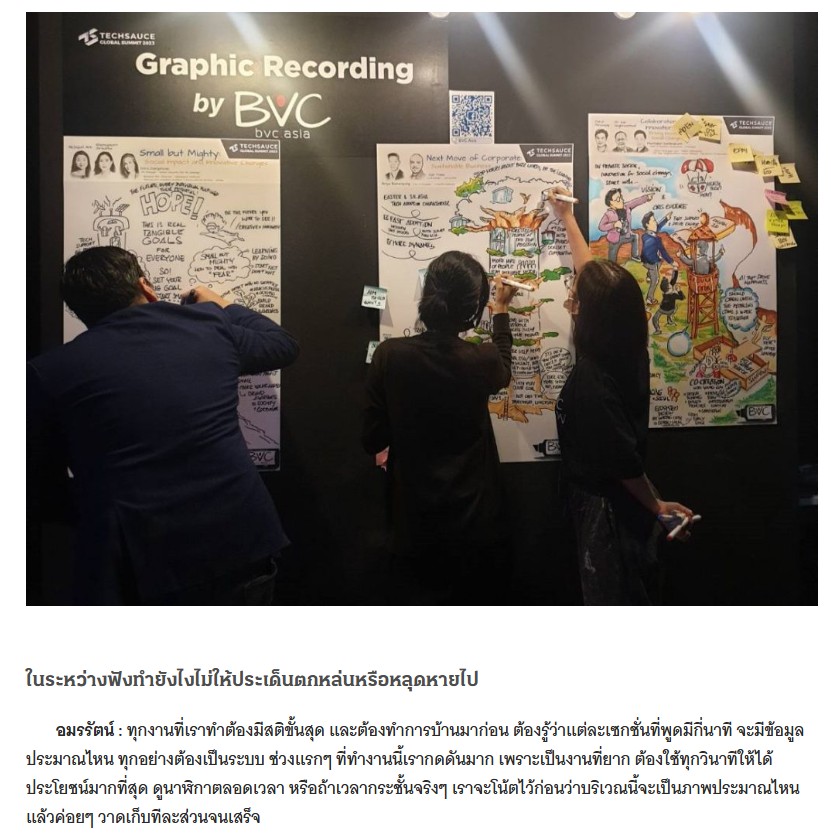
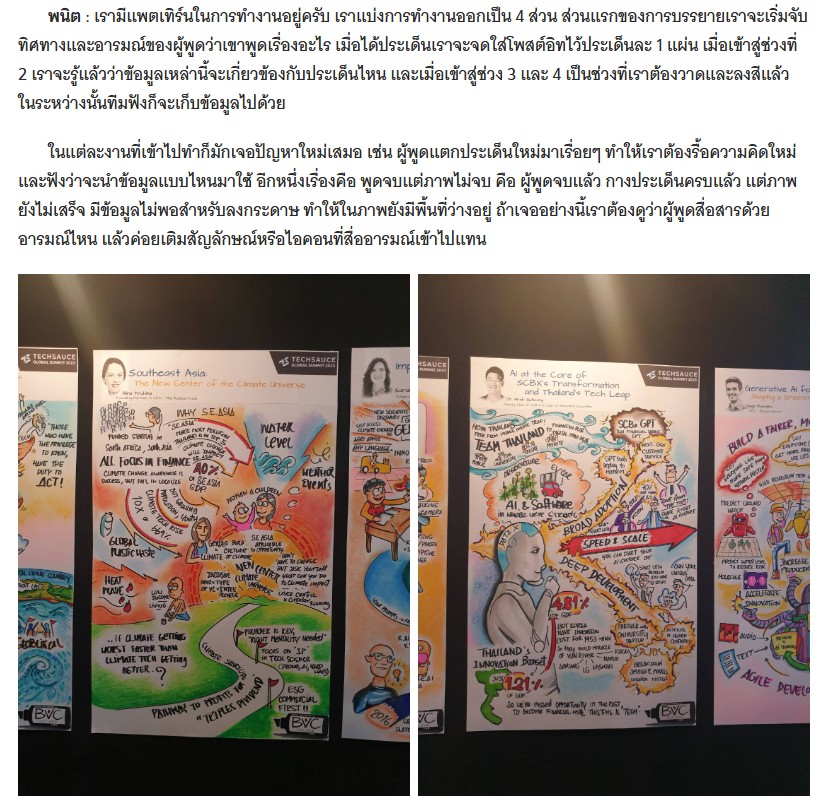
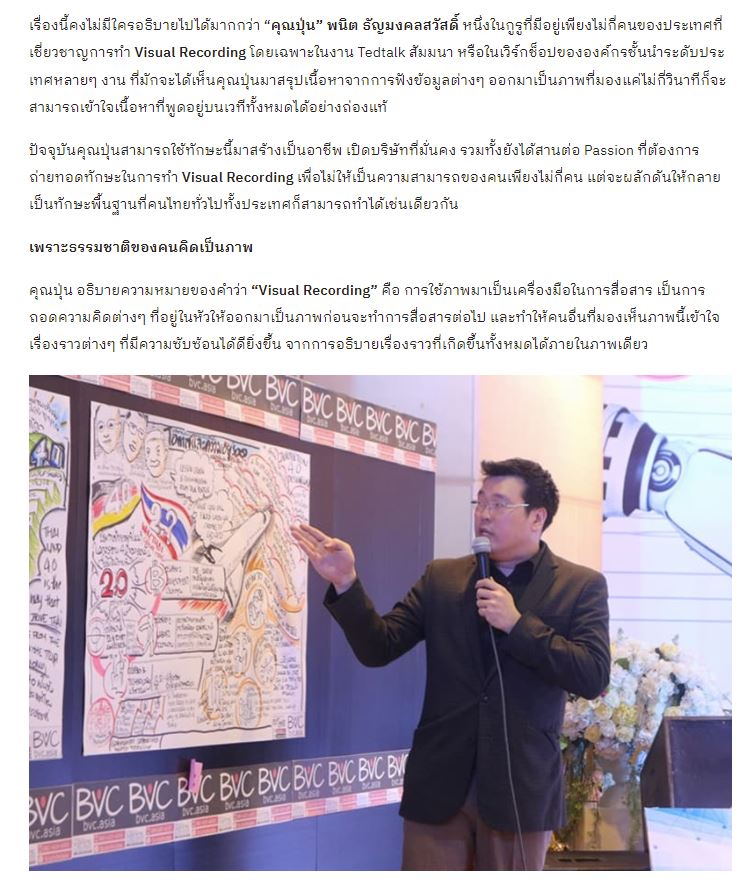
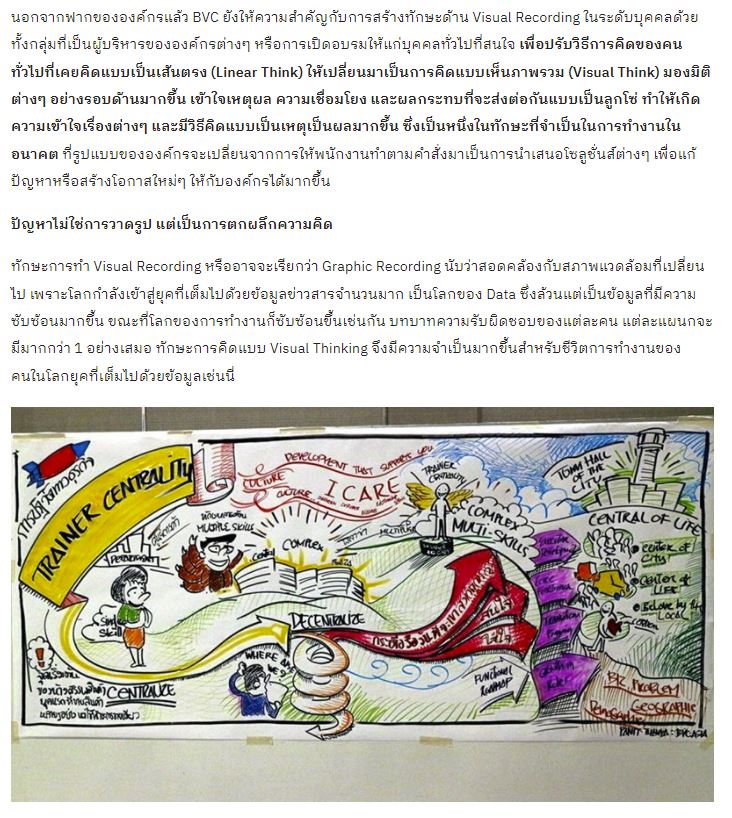
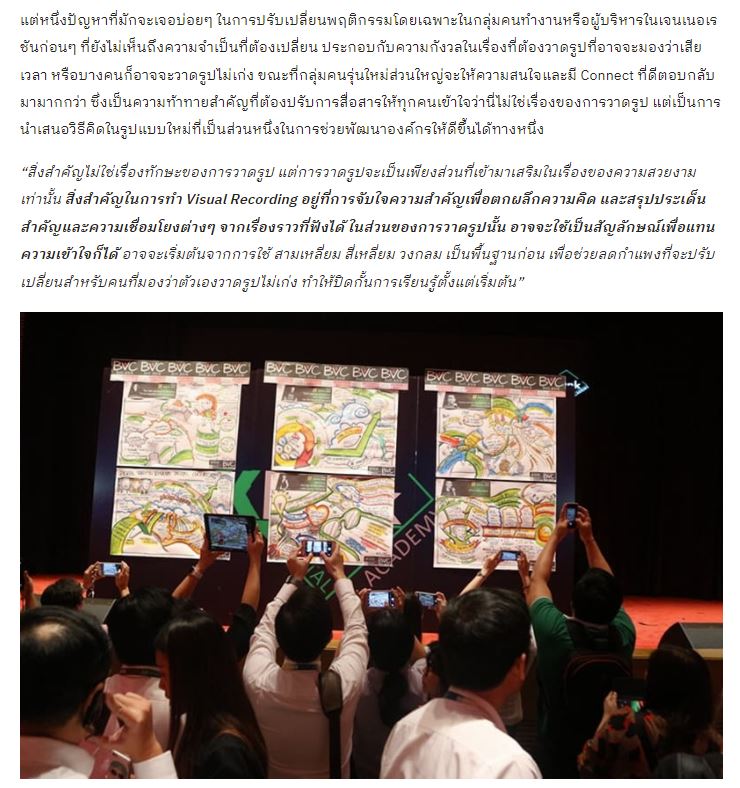
If you’re a fan of major national seminars, you’ve probably seen illustrations that transform complex topics presented on stage into beautiful and meaningful visual artworks that capture the essence of the message. Whether it’s the Southeast Asia international technology event, Techsauce Global Summit, where BVC Asia has been a part of the event for over 7 years, or the ESG Symposium 2023, where the company contributed through drawings that concretely reflect environmental issues. Each piece of work by BVC Asia is not only visually appealing but also embedded with useful information, which consistently attracts the audience’s attention. Many who see their work can’t help but pull out their phones to take photos and keep them.
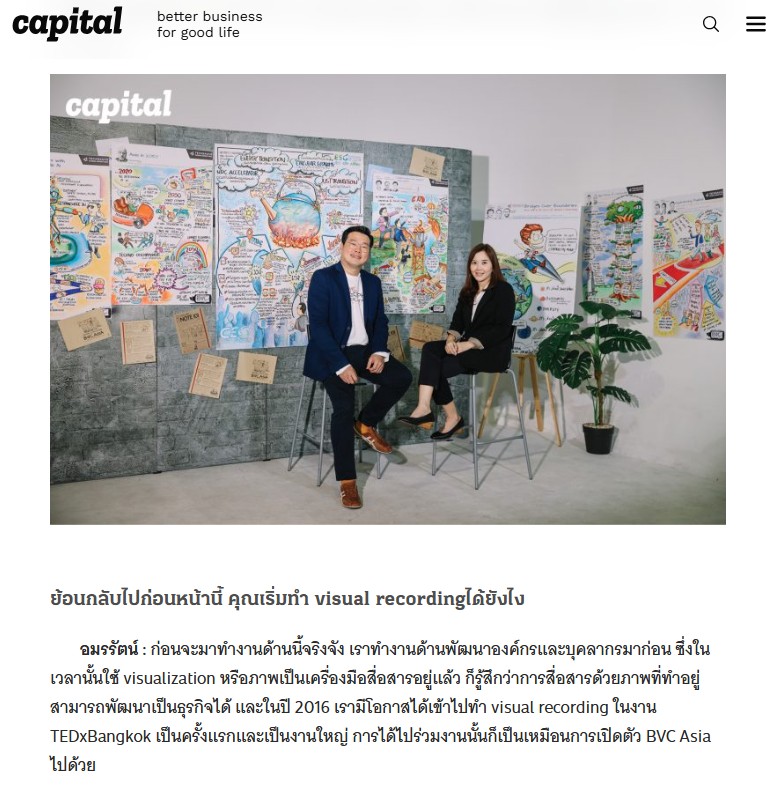
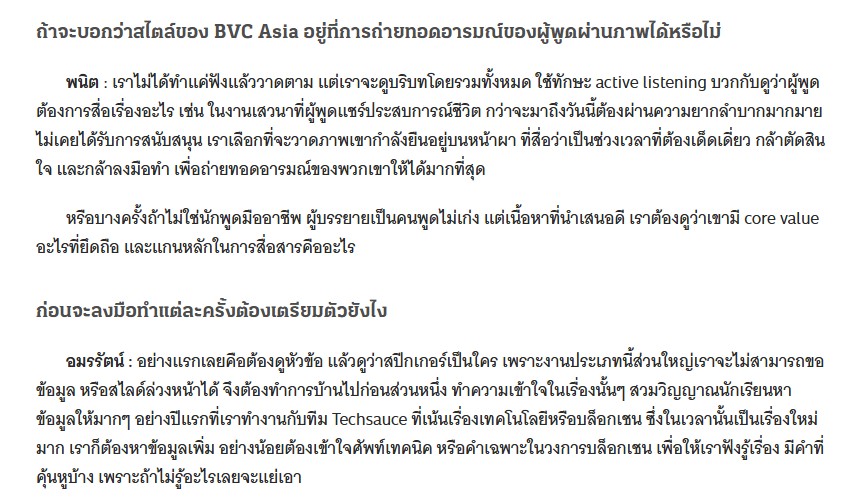
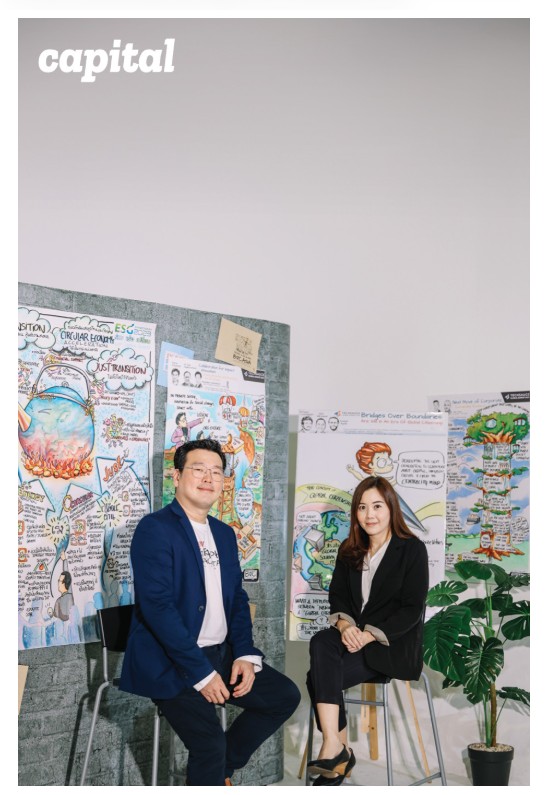
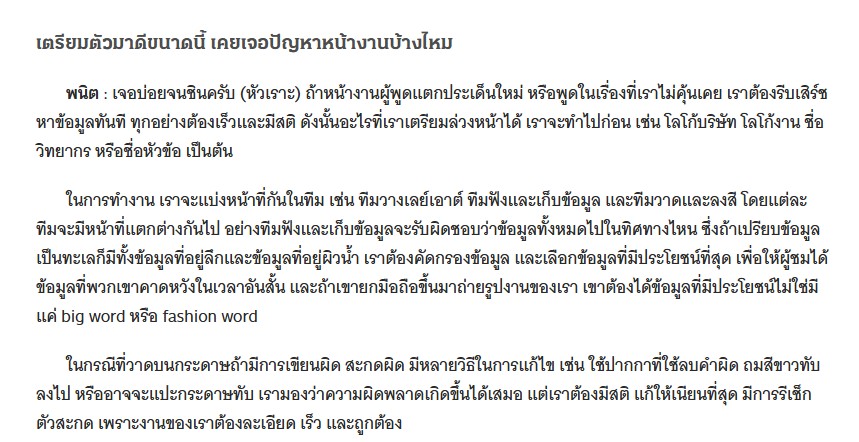
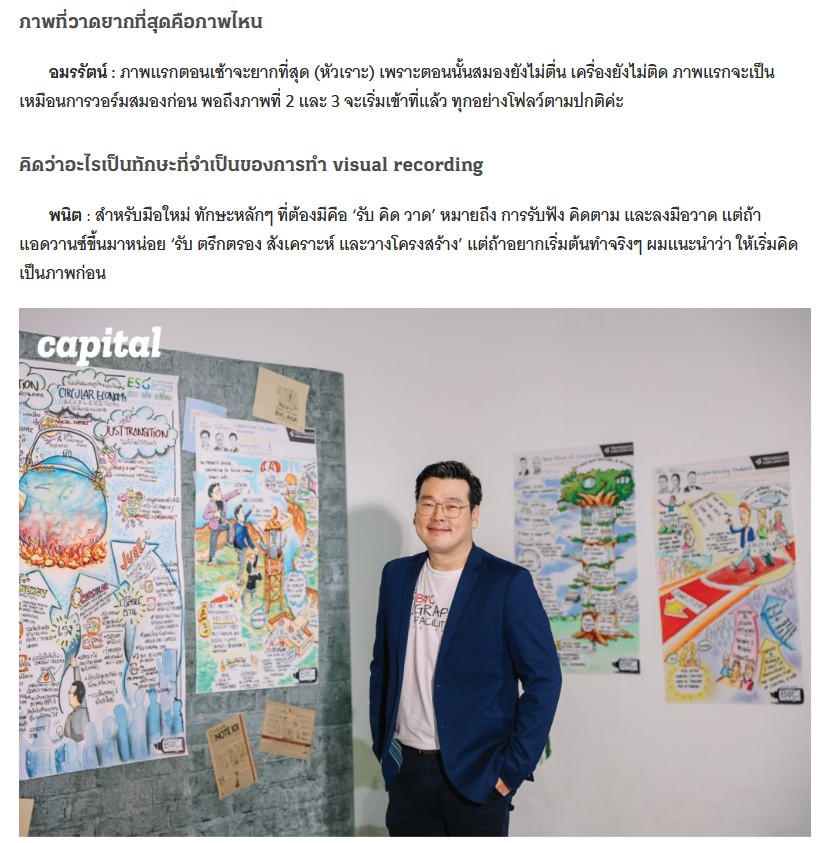
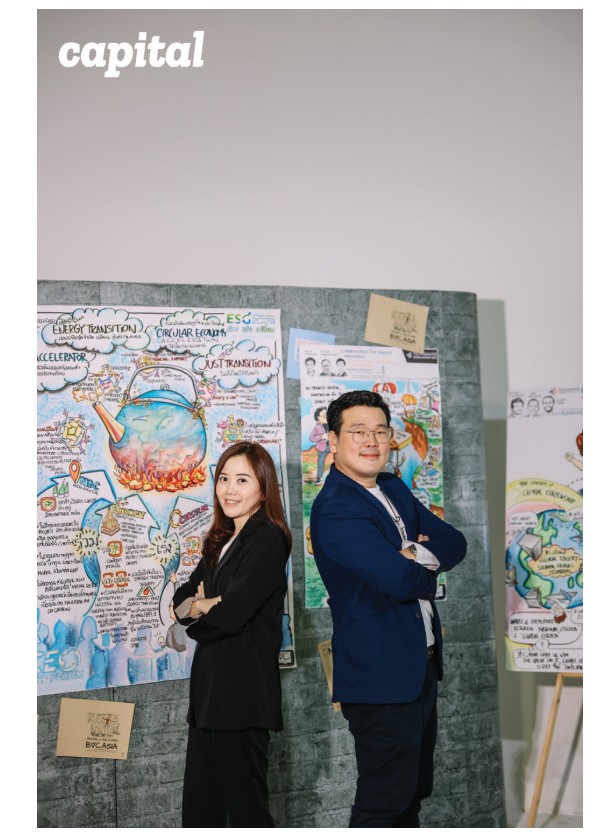
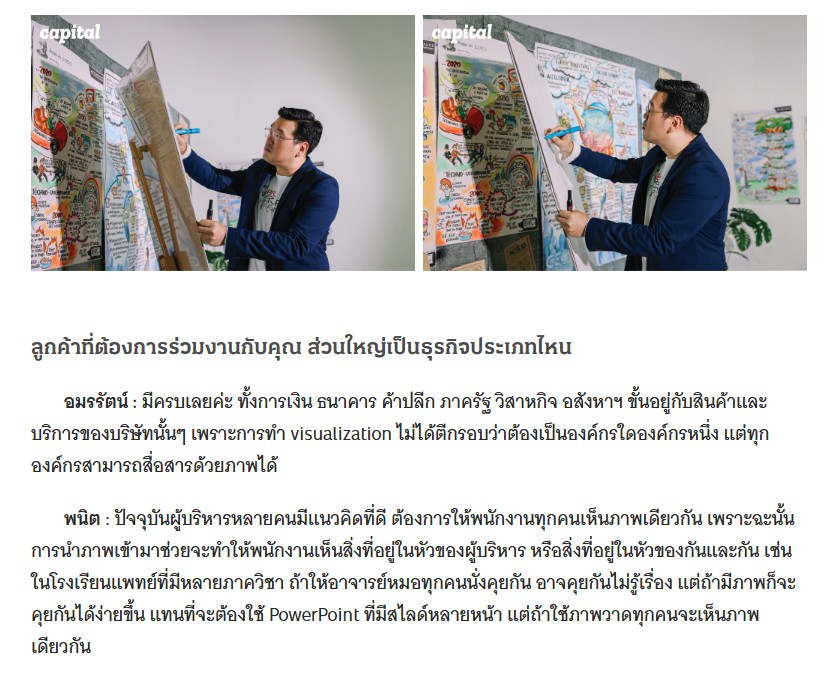
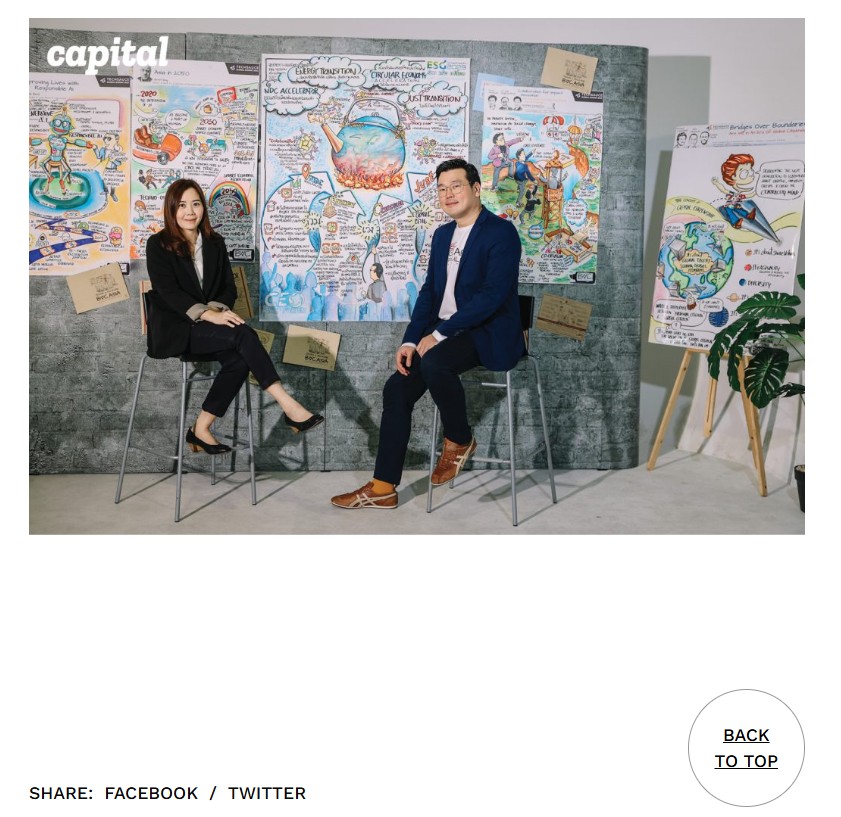
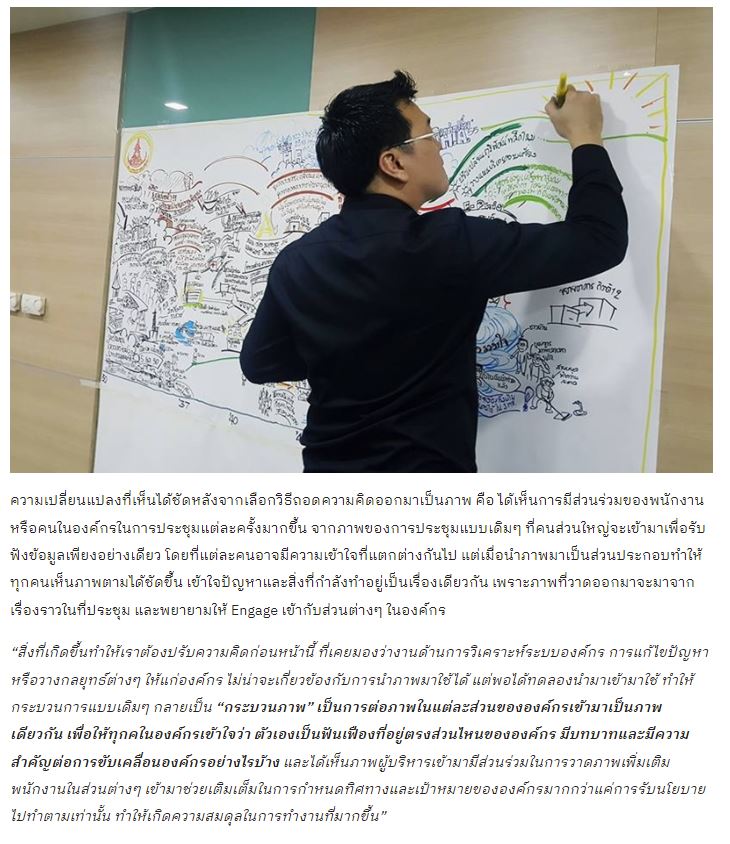
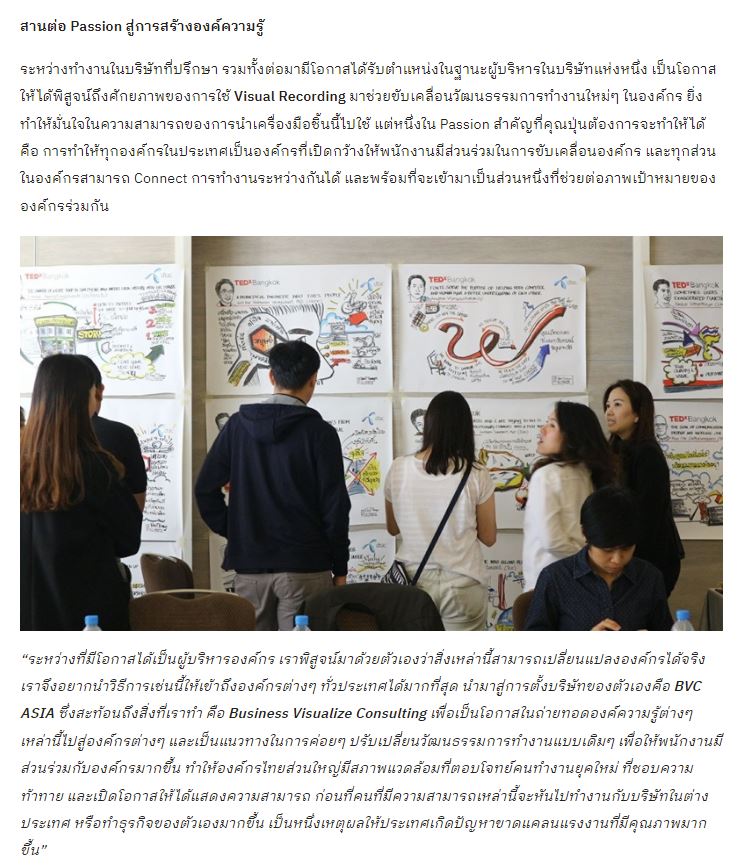
We therefore invited Poon – Panit Thunmongkolsawat, Co-founder, and Pang – Amornrat Suksayan, OD & Learning Consultant of BVC Asia, to share their thoughts, beliefs, and dreams as visual recording creators.How did you start doing visual recording? Amornrat: Before seriously working in this field, I worked in organizational and personnel development, where visualization or using images as a communication tool was already part of the work. I felt that this method of communication through images could be developed into a business. In 2016, we had the opportunity to do visual recording for TEDxBangkok for the first time — a major event. Participating in that event was like the official launch of BVC Asia as well. Panit: At TEDxBangkok 2016, we were involved in creating visual notes summarizing the key points on stage using drawings to enhance understanding of the topics. This had a wide impact. After working in this area for a while, we realized that there were very few businesses like this in Thailand. This made us believe that visual recording could be a viable profession, so we started BVC Asia from then on.At that time, there weren’t many businesses like this in Thailand. What were the challenges of doing visual recording? Amornrat: Most people thought visual recording was just drawing pictures. Our challenge was to create understanding — to make people realize it’s not just about making beautiful drawings, but about conveying information in a clearer way. It’s a combination of thinking and drawing. We wanted our work to connect with business as a communication tool, a way to discuss and exchange ideas. This method was still new to Thai people, who were used to just using PowerPoint. We wanted to change the traditional communication mindset. Panit: In this field, I see the challenge mainly in handling information. Every time we work, we get new knowledge and data that we need to update for the audience. We want to convey this information through drawings quickly, using keywords that immediately convey the content. The difficulty lies in being the first to input this information into people’s minds — to become their mental image or memory. Therefore, each image we create to capture key points must be complete in content, colorful, and contain symbols or visuals that make it memorable. Even someone from another country who doesn’t understand Thai can look at our work and sense what the image is trying to communicate.Some people might not understand how visual recording is similar to or different from infographics and mind mapping. Panit: There are three main differences: purpose, process, and quality. Infographics collect various pieces of information and organize them into layouts designed to help people remember. Mind mapping excels in showing completeness—it lets you see components and the hierarchical relationships between them. Visual recording, on the other hand, tells a story and explains concepts by leveraging humans’ natural ability to interpret images.What are the essential components of good visual recording? Amornrat: Every part is important—from layout, arrangement, and information to conveying emotion. A key strength of visual recording is its ability to express the speaker’s emotions. For example, in an SCG event discussing the environment and global warming, we used the keyword “Boiling Earth” to convey that the world’s environmental situation is more severe than just “global warming.” The image showed the Earth sitting on a boiling kettle, which grabbed people’s attention and raised awareness about the issue. Panit: It’s not just the information that matters; the speaker’s emotions and feelings are also a crucial element in visual recording. We have to listen carefully and sense how the speaker feels and what emotion they’re expressing, then try to convey that as much as possible. Sometimes, words alone are not enough.Can we say that BVC Asia’s style lies in conveying the speaker’s emotions through visuals? Panit: We don’t just listen and draw blindly. We look at the whole context, using active listening skills combined with understanding what the speaker wants to communicate. For example, at a panel discussion where the speaker shared life experiences, explaining how they overcame many hardships without support, we chose to draw an image of them standing on a cliff—symbolizing a moment of determination, courage to decide, and take action—to convey their emotions as fully as possible. Sometimes, if the speaker is not a professional orator and may not speak well but presents valuable content, we look for their core values and the main message they want to communicate.
How do you prepare before starting each visual recording? Amornrat: First, we look at the topic and who the speaker is. For this type of work, we usually can’t get information or slides in advance, so we have to do some homework. We prepare by deeply understanding the subject—wearing the mindset of a student and gathering as much info as possible. For instance, in our first year working with the Techsauce team, which focused on technology and blockchain—a very new topic at that time—we had to study technical terms or jargon to be able to understand the content and recognize familiar words. If we don’t know anything, it would be very difficult.
With such thorough preparation, have you ever faced problems on-site? Panit: We encounter issues quite often—so much that it’s become normal (laughs). If the speaker introduces new points or talks about topics we’re unfamiliar with, we have to quickly search for information on the spot. Everything must be done fast and with composure. That’s why we prepare as much as we can in advance—like company logos, event logos, speaker names, and session titles. During the work, we divide tasks within the team—for example, a layout team, a listening and data collection team, and a drawing and coloring team. Each team has different responsibilities. The listening and data team is responsible for understanding the overall direction of the information. If the data were an ocean, there would be deep and surface-level information. We have to filter and select the most useful data so the audience gets what they expect in a short time. And if they take photos of our work, it must contain useful information—not just big or trendy words. When drawing on paper, if there are mistakes like misspellings, there are many ways to fix them—such as using correction pens, covering with white paint, or sticking paper overlays. We believe mistakes can happen, but we must stay calm, fix them as seamlessly as possible, and double-check spelling. Our work requires precision, speed, and accuracy.How do you make sure you don’t miss or lose any key points while listening? Amornrat: For every job we do, we have to be extremely focused and well-prepared. We need to know how long each section will be and what kind of information to expect. Everything has to be systematic. In the beginning, we felt a lot of pressure because it’s a tough job where every second counts. We constantly watch the clock. If time is really tight, we’ll first jot down what kind of image should appear in that section and then gradually draw and fill in the details. Panit: We have a work pattern that we follow. During the first part of the talk, we try to capture the speaker’s direction and emotion—what they are talking about. When we identify key points, we write each one on a separate post-it note. By the second part, we already know which pieces of information relate to which key points. The third and fourth parts are when we draw and color, while the listening team continues to gather information. Every job comes with new challenges. For example, sometimes speakers introduce new points continuously, so we have to rethink and decide which information to include. Another issue is when the speaker finishes but the visual is not complete—the key points are all presented, but the drawing isn’t fully filled because there’s not enough information to fill the space. When this happens, we look at the speaker’s emotions and add symbols or icons that convey those feelings instead.Which drawing is the most difficult to do? Amornrat: The first drawing in the morning is the hardest (laughs) because the brain isn’t fully awake yet. It’s like a warm-up for the brain. By the second and third drawings, everything starts to fall into place and flow smoothly.
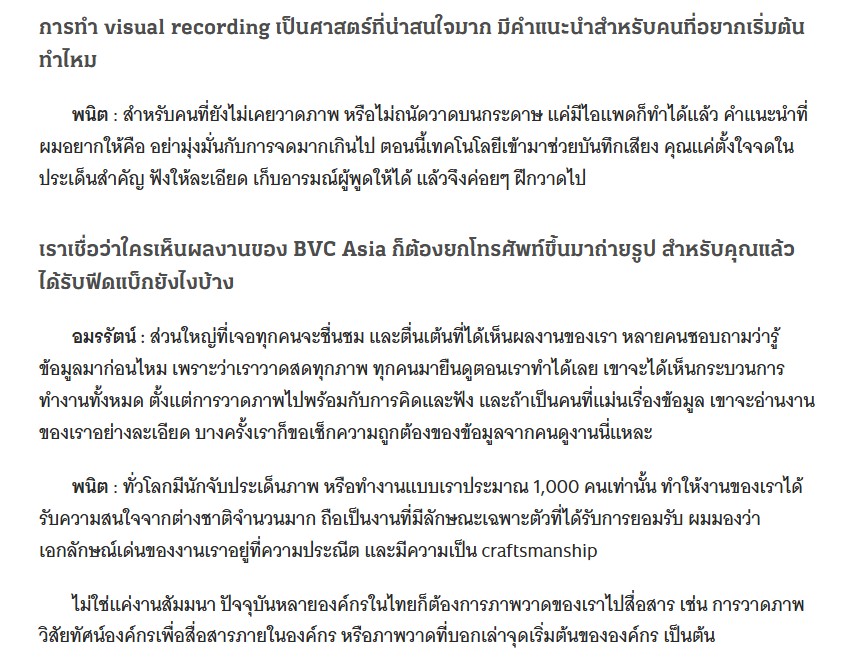
What do you think are the essential skills for visual recording? Panit: For beginners, the main skills are “Receive, Think, Draw,” which means listening, processing, and then drawing. For more advanced practitioners, it’s about “Receiving, Reflecting, Synthesizing, and Structuring.” But if you want to start, I recommend beginning by thinking in images first.Can someone with zero drawing skills do visual recording? Panit: Yes, absolutely. All you need is visual thinking—the ability to think in images. From childhood to adulthood, we’re often taught to take notes, not to draw, and art classes are usually limited to just a few hours. I want everyone to have the mindset that everything can be drawn—it’s not just about writing notes. Nowadays, many university professors encourage students to submit assignments as mind maps or infographics, which train visual thinking and systematic organization of ideas. Actually, you don’t have to draw beautifully like an artist. Just draw in a way that you understand yourself and organize the information. For example, draw a circle to represent a house, then connect lines to different topics—this trains your skill in grouping information. Or try choosing a product and illustrate the production process in images—telling the story visually.
Visual recording is a fascinating discipline. Do you have any advice for those who want to get started? Panit: For those who have never drawn or are not comfortable drawing on paper, just having an iPad is enough. My advice is not to focus too much on note-taking. Nowadays, technology can help record audio, so just concentrate on noting the key points, listen carefully, capture the speaker’s emotions, and then gradually practice drawing.
We believe everyone who sees BVC Asia’s work takes out their phone to take pictures. What kind of feedback have you received? Amornrat: Most people are very impressed and excited to see our work. Many ask if we had the information beforehand because we draw everything live. Everyone stands and watches us work, seeing the entire process—from drawing while thinking and listening. And if someone is an expert on the topic, they will study our work closely. Sometimes we even ask the audience to verify the accuracy of the information. Panit: Worldwide, there are only about 1,000 people who do visual recording or similar work like ours, so our work attracts a lot of international attention. It’s a unique type of work that’s highly respected. I think our distinctive quality lies in the meticulous craftsmanship. It’s not just for seminars anymore. Many organizations in Thailand now want our drawings to communicate internally—for example, illustrating organizational visions or telling the story of the organization’s beginnings.What types of businesses are your clients mostly from? Amornrat: We work with a wide range of industries including finance, banking, retail, government, state enterprises, and real estate. It depends on the products and services of each company because visualization is not limited to any particular type of organization—every organization can communicate through images. Panit: Nowadays, many executives have a good mindset and want all employees to see the same picture. Using visuals helps employees understand what’s in the leader’s mind or what others are thinking. For example, in a medical school with many departments, if all the doctors sit down to discuss, they might have difficulty understanding each other. But with visuals, communication becomes easier. Instead of many PowerPoint slides, drawings allow everyone to see the same image.
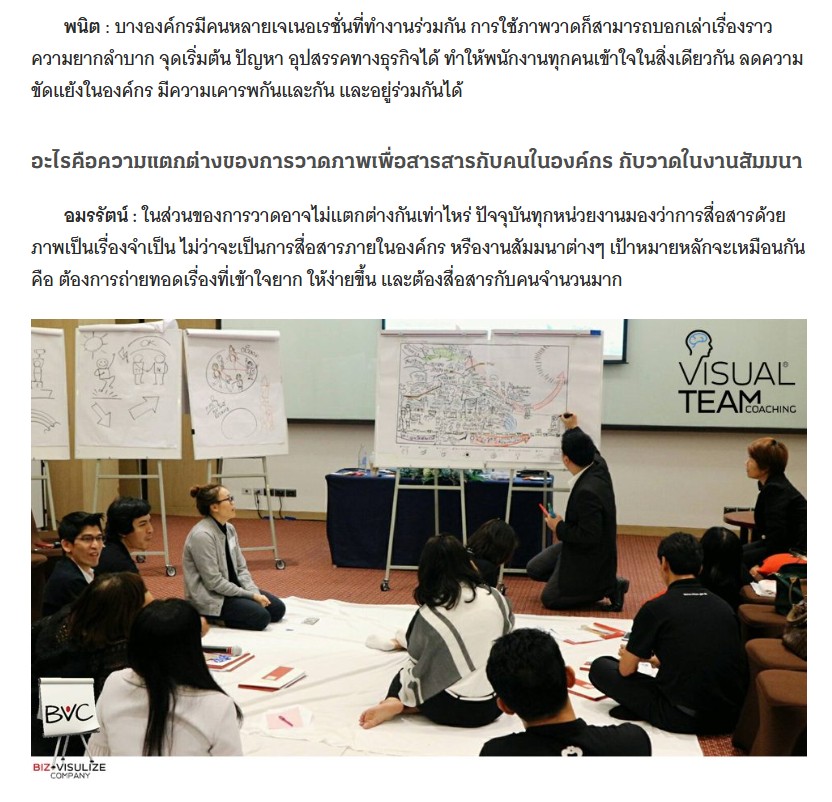
When you go into an organization to work, what do you do? Amornrat: Usually, we conduct workshops with employees depending on the organization’s needs. If it’s about organizational culture, we talk to employees at all levels. If it’s strategic, we might focus more on team leaders. In every organization, we have templates tailored to various business situations.Panit: Some organizations have multiple generations working together. Using drawings can tell stories about hardships, beginnings, business problems, and obstacles. This helps all employees understand the same thing, reducing conflicts within the organization, fostering mutual respect, and enabling them to work together harmoniously.
What is the difference between drawing to communicate within an organization and drawing at seminars? Amornrat: The drawing process is not much different. Nowadays, every department recognizes that communication through visuals is essential, whether it’s internal communication or seminars. The main goal is the same: to simplify complex topics and communicate effectively with a large audience.Over 7 years of serving clients in Thailand and abroad, what do you think has driven BVC Asia’s growth until today? Amornrat: We are quite uncompromising in every aspect of our work. We don’t see clients just as clients but as partners. We understand what they need—whether it’s internal organizational work or off-site seminars. We have in-depth discussions with clients to ensure the highest quality. We may not be a company that heavily markets itself; most of our work comes through word-of-mouth recommendations from client to client. Panit: I believe that belief is crucial. What I’ve always believed is that our work truly provides value—it solves problems and closes communication gaps. More importantly, I believe our work will become a valuable knowledge repository in the future. I believe we are a team that studies and researches organizations or events extensively because we see that if clients want us to be part of their event, we have to give our best. We want everyone to know the quality of this discipline. If we weren’t committed or just did a superficial job, we wouldn’t receive such positive feedback, and we ourselves wouldn’t be satisfied with our work. So, we continuously strive to improve.
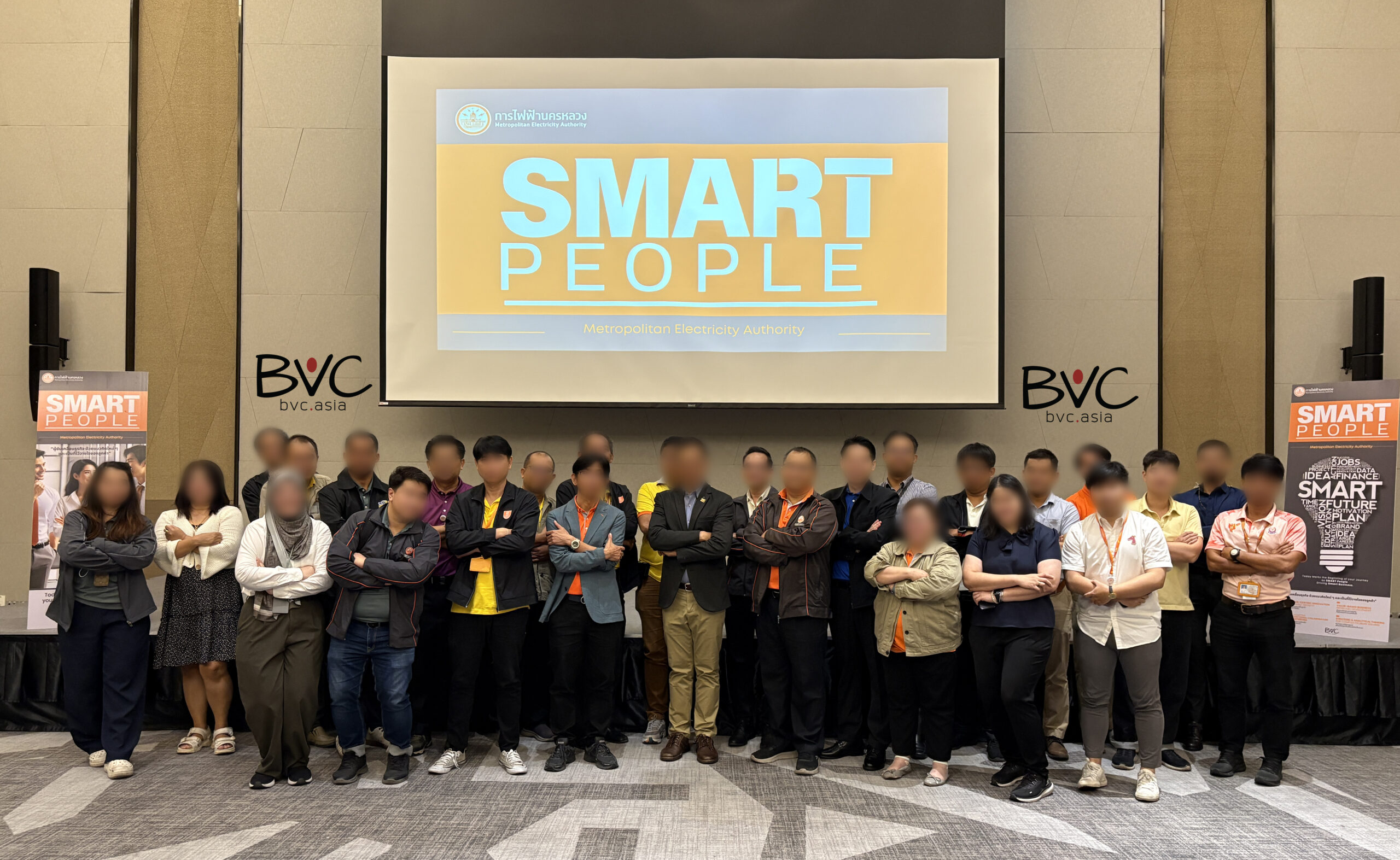
BVC.asia Trusted by MEA to Lead the “MEA SMART People” Project – Empowering Talent Towards Global Utility Standards
BVC.asia has been entrusted by the Metropolitan Electricity Authority (MEA) to drive the “MEA SMART People” initiative — a strategic project aimed at enhancing the capabilities of MEA People to meet the standards of leading global smart utilities.
This transformative program is a cornerstone in MEA’s long-term vision to build an organization that excels in innovation, service excellence, and workforce readiness. The “MEA SMART People” project focuses on holistic development, covering areas such as leadership, communication, digital adaptation, and progressive organizational culture.
“We are honored to be chosen by MEA for this pivotal initiative. BVC.asia is committed to being a thinking partner and helping MEA’s people embrace the future with competence and confidence.” — BVC.asia Executive Representative, Panit Thanya.
BVC.asia has collaborated closely with MEA leadership to design and deliver tailored learning experiences that align with the organization’s strategic goals and operational context.
More details:
To successfully elevate the capabilities of its workforce to a world-class standard, a structured, globally benchmarked approach is essential. The process begins with identifying and studying successful models from global metropolitan utilities, particularly in cities renowned for innovation and efficiency such as Singapore, Tokyo, and New York. These leading utilities offer valuable examples in areas such as Digital Utility Transformation, Workforce Upskilling and Reskilling, and the cultivation of a Customer-Centric Culture. By analyzing their strategies, it becomes clear that true transformation lies not just in technology adoption but in people readiness and cultural alignment. Once the exemplars are selected, the next step is to analyze their best practices and decode their success factors in detail. For example, global utilities have implemented robust Leadership Pipeline systems to ensure long-term continuity and strength in management. They have also embraced Agile Working Cultures, which allow for faster adaptation to market and technological shifts. In terms of technical capability, many employ a structured comparison of Strategic Competencies and Core Functional Knowledge to ensure their workforce is not only technically skilled but also strategically aligned with long-term organizational goals. These principles must then be carefully compared against the local organizational context to tailor an effective capability enhancement strategy suitable for the Thai utility sector.
Building on this analysis, organizations can then move forward by developing a capability-building framework aligned with global standards. A proven and effective model for workforce development is the 70:20:10 approach, which recommends that 70% of employee learning comes from hands-on job experiences, 20% from learning through others (e.g., coaching and mentoring), and 10% from formal training programs. This model ensures learning is continuous, embedded in daily work, and enriched by both structured instruction and collaborative environments. Complementing this is the design of a Learning Journey that aligns with a clearly defined Competency Map, tailored to different roles and growth stages. Central to this journey are future-oriented concepts such as Digital Literacy, Data Thinking, and a Sustainability Mindset, which are essential competencies for modern utility employees operating in an increasingly digital and environmentally conscious world.
To ensure that development initiatives are producing measurable results, it is crucial to establish Key Performance Indicators (KPIs) and Talent Indicators that are benchmarkable. Some globally recognized indicators include the Digital Maturity Index, which assesses how well individuals and teams apply digital tools and systems in their roles; the Leadership Readiness Score, which evaluates the strength and preparedness of leadership pipelines; and the Service Excellence Index, which monitors the effectiveness and customer-centricity of frontline operations. These indicators provide data-driven insights into where development efforts are succeeding and where further investment is needed.
Finally, sustainable transformation requires not only systems and training but also strong internal communication and the cultivation of a future-ready culture. Organizations must embed the concept of “SMART People” into everyday narratives, encouraging a shared vision that connects individual development to broader organizational goals. This includes consistent messaging from leadership, storytelling that celebrates progress and impact, and initiatives that reinforce new values and behaviors. A visible shift in culture—where learning, agility, and innovation are embraced at every level—becomes the foundation for long-term success. By integrating these five pillars—global benchmarking, strategic practice adaptation, competency-aligned frameworks, measurable outcomes, and cultural alignment—organizations can confidently uplift their people to operate at par with the best in the world.
BVC.asia ได้รับความไว้วางใจจาก MEA เดินหน้าขับเคลื่อนโครงการ “MEA SMART People” เสริมศักยภาพบุคลากร สู่มาตรฐานสากล
Panit was honored to give an interview to “Brand Buffet” after participating in important major events like Techsauce Global Summit 2017-2018, TEDx Bangkok, Startups Thailand and many other notable events in Thailand. (Visit Brand Buffet Archive page)
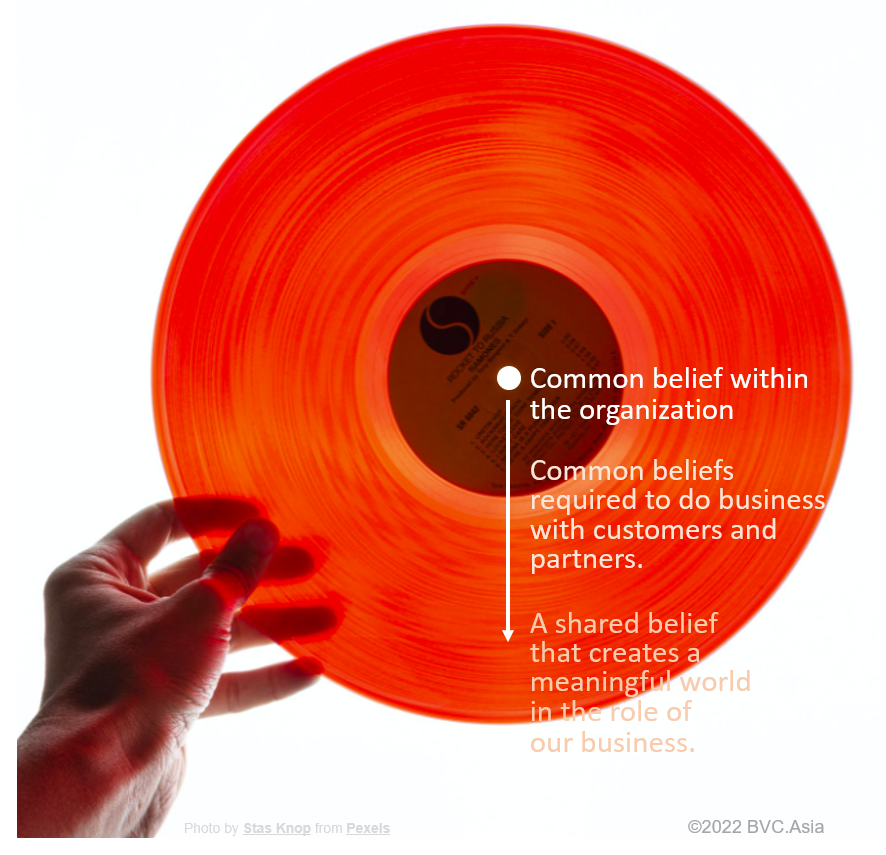
The COVID crisis has forced employees and executives to work from distinct locations, and employees start learning to work with a virtual team. Many corporate values focus on building beliefs in everyone in the company and tending to make decisions in the same direction to create consistency in work as well as to make it easier to manage change.
“Change happens faster than managing organizational change.”
Amornrat Suksayan
The key factor that makes corporate values is not just propaganda for leading organizational change or just a symbol of mass beliefs. But it is a crucial tool that leaders must apply by looking at the following “post-Covid” variables:
Hybrid Workplace: Today’s workers don’t come together in real places every day. They have another private world that may shape their beliefs. In the past, we may only see differences in ethnicity or place of residence or professional beliefs, but today, their “family” is clearly contributing to their personal beliefs.
Gender Diversity, Personal Taste and Self Confident: Preserving the individual right to believe something is an increasingly important concern for the new generation. Self-confidence is forged by a more expressive framework of self-confidence than any generation. Strategies for communicating values and making beliefs without coercion are especially important.
Rapid business expansion or reduction: Core values in Asia emphasize stability and trust in the organization. “Unity” is the heart of success in many organizations. The volatility of mergers and acquisitions or even business dissolution/expansion creates situations that are contrary to the values that leaders are trying to refer to.
Multiple Core Values: Employees in a temporary contract that hold the values of the parent organization.
Transformational trends require organizations to share common values that enable them to cope with business challenges in a way that people in their organizations feel empowered and believe they are always doing good for the organization.
However, having shared values seems difficult because the above factors clearly indicate that employees value individual values over shared values of the organization. The key is that leaders do not view corporate values as corporate values but view them as personal values of everyone.